The First Weekend of June

Well, it is the first weekend of June and it has already been a whirlwind of one.

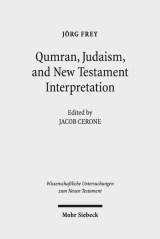
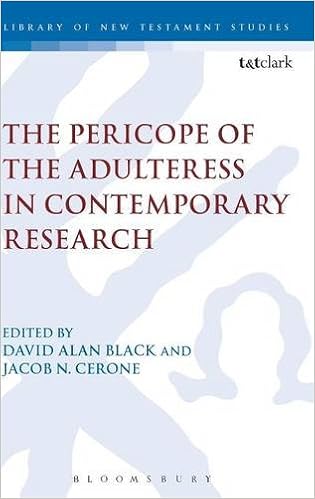
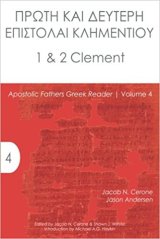
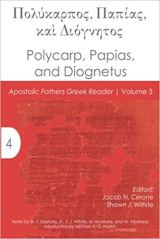
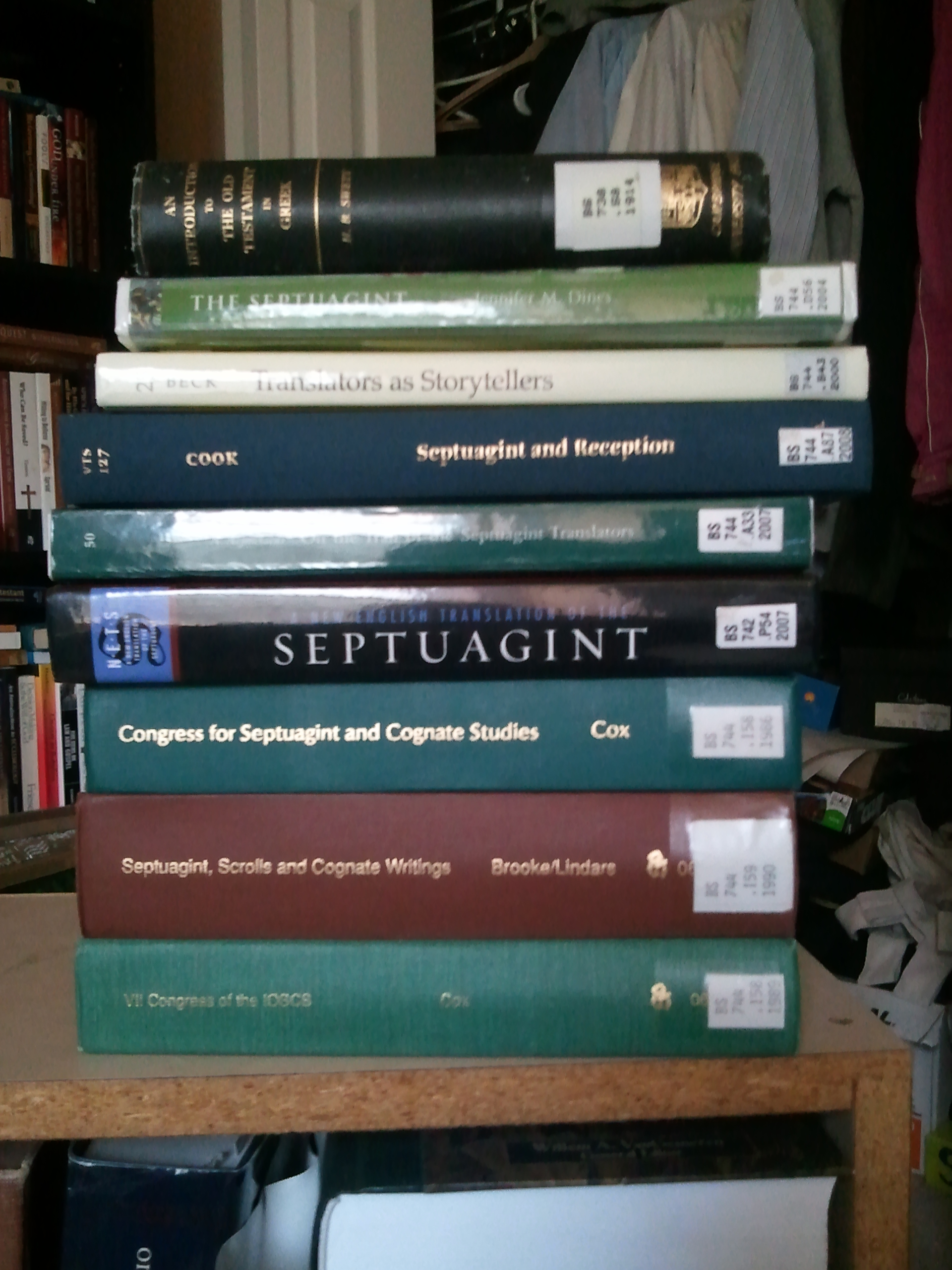
Friday: Started Bibliographical Research course and immediately checked out this stack of resources.

Saturday Morning: Dad Massengill helped finish installing power and lights in the pantry.

Saturday Morning an hour later: We got an unexpected call from friends that moved back to Virginia asking if they could crash at our place over the weekend.  I cannot express how happy we were to oblige!

Saturday Afternoon:  We cleaned the downstairs and upstairs.  I don’t remember a time the house has been cleaner.

Sunday Afternoon:  I spent the afternoon tilling the rest of the bakyard, raking out the dead grass and weeds, planting new seed, and putting out fertilizer.

Sunday Evening: And now for dinner with wonderful friends.

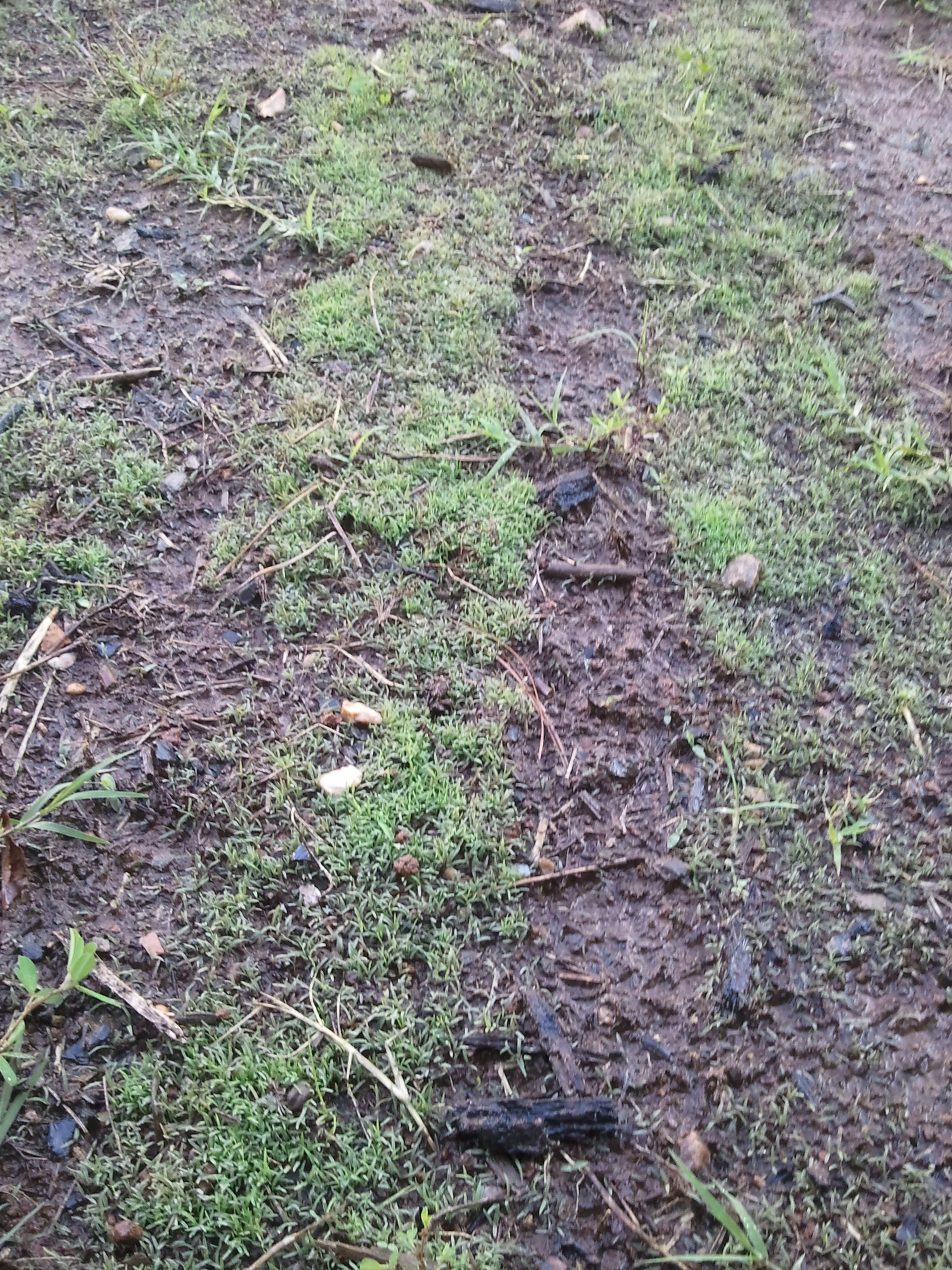
Oh…and on a final note, here is a shot of the recently germinated grass (the grass I planted about a week and a half ago).

Posted in Life | 1 Comment

A Brief Update

I)  Last night Mary Beth and I finished putting the sheet rock up in the new pantry.  We also began the taping and mudding process.  We taped up three joints (I’m sure we could have done more last night) and are letting it dry for the second coat.  Here’s to hoping that it will turn out nice and smooth when it comes time to sand.  I am hopeful as we have already avoided the first pitfall of applying joint compound tape…bubbles.

II)  Today I met with my major professor for the ThM I am currently pursuing.  Dr. Black went ahead and gave approval for me to start work on 7500 Bibliographical Research.  This course, to some, might seem rather daunting and tedious.  It is composed of three major sections:

1) An annotated bibliography on all major “textbook” or “survey” resources in the Seminary Library in the major field.

2) A brief annotated list of Library holdings of relevant journals or other periodical literature in the major field.

3)  A highly specialized annotated bibliography of perhaps 25–30 sources by topic as assigned.

A total of around 150-175 sources will need to be reviewed and annotated.  What better way to know the resources available in one’s field of study and be familiar with the content!

In summary, wish me luck as I drop a job in order to take on 7500 Bibliographical Research, installing grass, tending the garden, creating a pantry, speaking to a youth group at a retreat, vacationing with the wife, and keeping up a tidy home!

Posted in Uncategorized | Leave a comment

A Weekend in Georgia

This past Memorial Day weekend Mary Beth and I went to Georgia to visit my sister and her husband at their lake house.

We arrived here around 1:30AM after a long drive from Holly Springs NC.  On Saturday, we spend the day swimming in the lake, out on their boat, and we both went tubing for the first time ever.  It took Mary Beth a bit of time to warm up to the idea, but after a few runs she was ready to get some air.

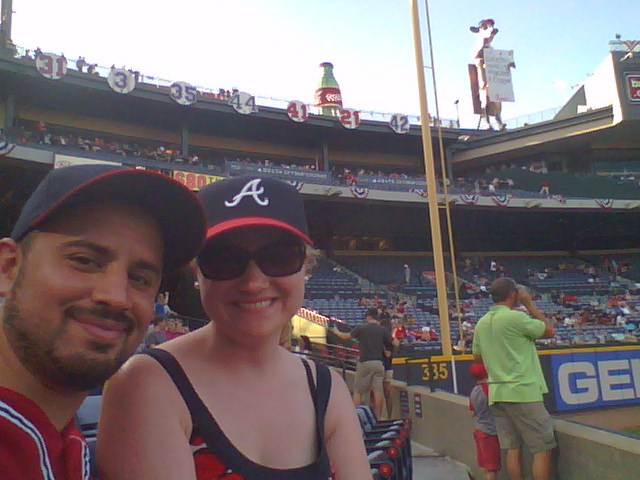
After spending a wonderful day with family, we drove up to Atlanta Sunday morning.   We checked into our hotel and went out to the Turner Field in order to take a tour.

Above is a shot of where Fulton Stadium once stood.  It is now a parking lot.  In the middle of the lot is a commemoration of where Hank Aaron’s 715th home run landed.

Put me in coach!  Me in the Braves dugout.

Me getting ready to take some bp.  Don’t laugh, I could be a big league star…with the exception of the belly and the five inches too short…

And you thought this trip was all about me?  Naw.  This was all made possible as a gift from James (my brother) to Mary Beth for her birthday.  This was Mary Beth’s first time at Turner Field watching her new favorite baseball team.  Here we are sitting on three rows away up from left field.  The only thing that would have made the day better?  Not losing to the Nationals 7-2.  Nevertheless, I was able to spend a weekend experiencing new things mit meine schöne Frau. I couldn’t have been happier!

Well, we are back in NC, back to work, and now, it is time for me to get back to studying.

Auf Wiedersehen

Posted in Life | Tagged , , | Leave a comment

New News

Recently, I have been away from the blog and the blogging world.  Mary Beth and I have been in the process of doing some remodeling at home.  I was finally motivated to start the sheet rocking process for our new pantry.  That part is almost done.  Picture to follow upon completion.

We are also planting Bermuda grass.  If it were up to me, I couldn’t care less about grass.  Let the weeds have at it.  Doesn’t bother me one bit.  Same is the case for most people in my neighborhood.  Yet, if we ever intend to rent the place out while we are gone to Germany (to someone other than my brother), then I suppose they will be expecting a lush lawn…or something like that.

We have also been hard at work on the garden.  Hopefully something might come of it.  I have my doubts.  I think the soil is a bit bad…starting to see early signs of blight.  Das ist nicht gut.

My reading has been a bit sporadic.  There has been less time for reading and writing because work has picked up a bit.  Nevertheless, I have found time to fit in a little bit of Feuerbach’s The Essence of Christianity, Beale’s A New Testament Biblical Theology, picked up A.T. Robertson’s Greek Grammar, and I started doing some more NT translation (made it through 7 chapters of Romans in a day).

The final development in my and MB’s life is that I have resigned from my current post (effective June 15th) in order to return to Southeastern for my Masters of Theology.  I will be studying the Septuagint under Dr. David Black.  Some of you might be thinking, “But I thought Germany was next.”  Well, this is an intermediary stepping stone along a long and winding path that leads to an underpaid job as a professor.  Why do I do it?  Because nothing thrills me more than sharing the knowledge I have acquired about our great God with students who are eager to learn.  I cannot imagine  not having an outlet to pour into others lives as others have poured into mine.

Posted in Life | Tagged , , , , , , , | 1 Comment

Home- Marilynne Robinson

I have been on a bit of a fiction roll this past week.  I just recently finished reading Marilynne Robinson’s novel, Home.  This novel runs alongside her previous novel Gilead.  James Wood, in his review of the book, writes, “Home is not a sequel to that novel but more like that novel’s brother, since it takes place at the same narrative moment and dovetails with its happenings.”

If Jack and Glory Boughton were characters that interested you in Gilead, you will be happy to find that they are the prominent characters in Home.  In the novel, Robinson grapples with concepts such as forgiveness, grace, mercy, exile, and restoration.

This is an excellent read for those who love theology and fiction.  Be prepared to be affected.  At points it will grip your soul.

Posted in Book Reviews, Life, Religion | Tagged , , , , | Leave a comment

As One Devil to Another: A Review & Contest Winner

Disclosure of Material Connection: I received this book free from the publisher, Tyndale. I was not required to write a positive review. The opinions I have expressed are my own.

As One Devil to Another is a series of correspondences from Slashreap, a senior-tempter in His Infernal Majesty’s bureaucratic regime, to his nephew Scardagger.  Platt strengthens the ties between his work and Lewis’ Screwtape Letters by establishing familial ties between Slashreap and Screwtape; Slashreap and Screwtape are brothers.  This tie allows Slashreap the ability to draw upon the past failures and blunders of his nephew Wormwood as motivation for Slashreap’s success. 

For those who could not get enough of Lewis’ work, As One Devil to Another is a must read.  Walter Hooper, biographer and editor of C.S. Lewis writes, “It reads as if C.S. Lewis himself had written it.”  Though the advertisements on book covers can, at times, be a bit hyperbolic, this one is not.  If you didn’t like Screwtape Letters you will not like Platt’s work.  Platt has attempted a great feat, to adopt the writer’s voice of one of Christianity’s most distinguished writers, and he has done it admirably.

This is not to say that all is well with the book.  At points I felt as if Platt recognized the insurmountable nature of his task and either 1) referenced the spiritual impact and genius Lewis has had on the world in a manner in a manner that jars the reader, or 2) paraphrased large sections of Lewis’ work.  For instance, when referring to the library of the “client’s” aunt, Slashreap writes, “A perusal of her shelves will give you a working knowledge of the formidable creature that has bested you.  Among her special favourites you will find a pestilential writer named Lewis.  Whatever you do, don’t try to remove these volumes. .  I doubt very much you will be able to come near them, as they will sear your flesh beyond recognition, and make you even less useful than you have already been to me and to the cause of Hell” (37).

This is not the only example of where the “third-wall” of the narrative is broken.  When addressing the problem of pain, evil, and suffering in the world (27-34), I was transported from the fictional world Platt established to a lecture I heard in a seminary epistemology class concerning the “free-will defense” against the problem of evil.  Platt’s representation of the position is well articulated, but it seemed out of place in a book composed of informal correspondences between uncle and nephew.

Though the previous two critiques rested upon stylistic matters, here I offer three instances of poor theological statements. 

  1. Platt writes, “After all, she reminded her, obedience is not the result of understanding the Adversary, but is a prerequisite to understanding him” (84-5). In response, I offer 2 Corinthians 3:18, ” And we all, who with unveiled faces contemplate the Lord’s glory, are being transformed into his image with ever-increasing glory, which comes from the Lord, who is the Spirit.”  This is not to say that obedience is irrelevant to understanding.  Obedience places us in a posture to listen to further instruction.  Yet, we are constantly reminded that beholding Christ leads to becoming like him.
  2. In one of Slashreap’s letters, he writes, “[God] even has put about the ridiculous fiction that He willingly died for us as well, and would welcome us through the gates of Heaven if only we would choose to lay down our arms and return.  As one would expect, this is a trap.  We are not such fools” (87). This invitation is certianly available for fallen humans, but is nowhere attested to in scripture for fallen angels (at least to my knowledge).
  3. Finally, and this is a bit of a plot spoiler, when the aunt is diagnosed with cancer, Slashreap writes, “The doctor…simply assumed the aunt would accept every treatment he had to offer, however time-consuming, invasive, or unpleasant.  We have taught them that life is the primary good, death the greatest evil.  The aunt does not believe this….She conceded to both the client and the astonished doctor that there will be pain, but, as she pointed out, there will be pain in any event.  The cancer always wins.  She regards the sentence of death as a severe mercy.  There will be no long years of dependency, no nursing home, no operating theatre, no recovery time, yet she has been granted sufficient time to place her affairs in order and say what little is unsaid to those she loves” (120-1). While Platt is correct that death is not the final adieu for the Christian, it is in fact one of the greatest evils.  Death is the consequence for sin.  The world was not meant to be this way.  Furthermore, and more to the point, does not Paul say in Philippians, “For to me, to live is Christ and to die is gain. If I am to go on living in the body, this will mean fruitful labor for me. Yet what shall I choose? I do not know! I am torn between the two: I desire to depart and be with Christ, which is better by far; but it is more necessary for you that I remain in the body. Convinced of this, I know that I will remain, and I will continue with all of you for your progress and joy in the faith, so that through my being with you again your joy in Christ Jesus will overflow on account of me.  Though Paul recognizes Christ is the ultimate end and good, he does not take the life we have been granted on earth lightly. 

All in all, the book was enjoyable.  Platt aptly handled the current issues of the day: political correctness, homosexuality, television, internet, reality tv, the state of scholarship, etc.  The plot twist at the end was unexpected and delightful.  Platt has done Lewis a great honor with this contribution.

BOOK GIVEAWAY WINNER: Justin Boulmay!

Posted in Book Reviews, Religion | 1 Comment

Feuerbach on the Providence of God

I found this quote to be both insightful and incisive :

Creation out of nothing, as identical with miracle, is one with Providence; for the idea of Providence–originally, in its true religious significance, in which it is not yet infringed upon and limited by the unbelieving understanding–is one with the idea of miracle.  The proof of Providence is miracle.  Belief in Providence is belief in a power to which all things stand at command to be used according to its pleasure, in opposition to which all the power of reality is nothing.  Providence cancels the laws of Nature; it interrupts the course of necessity, the iron bond which inevitably binds effects to causes; in short, it is the same unlimited all-powerful will, that called the world into existence out of nothing.  Miracle is a “creatio ex nihilo.”  He who turns water into wine, makes wine out of nothing, for the constituents of wine are not found in water; otherwise, the production of wine would not be a miraculous, but a natural act.  The only attestation, the only proof of Providence is miracle.  Thus Providence is an expression of the same idea as creation out of nothing.  Creation out of nothing can only be understood and explained in connexion with Providence; for miracle properly implies nothing more than that the miracle worker is the same as he who brought forth all things by his mere will–God the creator.

Posted in Quotes, Religion | Tagged , | Leave a comment

Answer: Name That Author 04/19/12

Although no answers were posted in the comments section of my last post, I did receive a few via email.  Most thought that it was either Barth or Kant (note: these were received before I added the hint about a German who lived in the 1800s).

The answer, as you may by now know, is Ludwig Freuerbach and the text is The Essence of Christianity.

Typically in these sorts of posts I simply provide the answer to the question.  But at the recommendation of my mother-in-law, I will provide a little background information about the author (taken from this wikipedia article), a brief explanation of the excerpt I quoted, and the impetus behind my selection.


Background:
Feuerbach (July 28, 1804 – September 13, 1872) was a philosopher and anthropologist.  He was trained at the University of Heidelberg.  He completed his education in natural science at the Friedrich-Alexander-University in Erlangen.  While at Heidelberg, he was greatly influenced by the Hegelian understanding of the dialectic, and he believed that Christian theology would eventually be superseded.  In 1841 he published Das Wesen des Christentums (The Essence of Christianity), which was translated by George Elliot.

ExplicationAt this point in the book, Feuerbach is seeking to closely tie the nature of an entity with its faculties.  That is, its capacity for love, intelligence, beauty, feeling, etc.  He argues that a caterpillar knows nothing other than the tree which sustains it.  Its understanding of its world is limited by its nature and vice versa.  He sustains the parallel to humanity.

This unity between the nature of the individual and the object perceived allows him to make his case about religion and God.  He argues that God is as the worshiper understands him to be.  The worshiper cannot conceive of God as anything greater than his nature and understanding allow him.  He also addresses the thought that what God is in and of himself differs from how we perceive him to be. He counters this with the claim that it is skepticism…the very enemy of religion.  For, in so doing, we make the case that God is different than our beliefs about him, and thus, our beliefs about him are worthless.

As he gets further into the book, he explains that the virtues that humanity is capable of experiencing and expressing, unlike any other creature (i.e. love, joy, peace, wisdom, etc.) exist outside of God.  God is God for the worshiper because he  conforms to these virtues.  That is to say, virtues are not virtuous because God possess them; they are inherently virtuous/admirable.

Why? I picked this particular quote because, though taken out of context, it addressed the very intent I had in starting this read.  As Feuerbach says, “A being’s understanding is its sphere of vision.  As far as thou seest, so far extends thy nature; and conversely.”  I am hoping to broaden my field of vision and understanding.

Posted in Uncategorized | 1 Comment

Name That Author: 04/19/12

Make your guesses as to the author and the work in the comment section below!

[edit: hint…German from the 1800s]

The measure of the nature is also the measure of the understanding.  If the nature is limited, so also is the feeling, so also is the understanding.  But to a limited being its limited understanding is not felt to be a limitation; on the contrary, it is perfectly happy and contented with this understanding; it regards it, praises and values it, as a glorious, divine power; and the limited understanding, on its part, values the limited nature whose understanding it is.  Each is exactly adapted to the other; how should they be at issue with each other?  A being’s understanding is its sphere of vision.  As far as thou seest, so far extends thy nature; and conversely.  The eye of the brute reaches so far as it needs, and its nature no farther than it needs.  And so far as thy nature reaches, so far reaches thy unlimited self-consciousness, so far art thou God.  The discrepancy between the understanding and the nature, between the power of perception and the power of production in the human consciousness, on the one hand, is merely of individual significance and has not a universal application; and, on the other hand, it is only apparent.  He who, having written a bad poem, knows it to be bad, is in his intelligence, and therefore in his nature, not so limited as he who, having written a bad poem, admires it and thinks it good.

Posted in Name That Author, Quotes | Tagged | 1 Comment

The Unlikely Disciple: A Sinner’s Semster at America’s Holiest University

The other day I finished reading/listening to Gilead.  I perused Audible’s Semi-Annual sale list in hopes of finding a new and cheap read.  I found Kevin Roose’s book, “The Unlikely Disciple.”  The book’s cover and its title were, at first, a bit disconcerting.  The book centers on Kevin Roose’s, a student at Brown University, journalist endeavor to cross the “God divide.”  He wanted to understand conservative Christianity on its own terms, and he signed up for courses at Liberty University.

I was afraid that this book would be a series of anecdotes lambasting Liberty’s students for their antiquated ideals, ethics, and theological convictions.  The overwhelming positive ratings the book received on audible from self-proclaimed Christians, with the occasional outlier, persuaded me to spend the $9.95.  Roose makes the note that with popular secular opinion the way it is, as well as the unforgivable gaffs evangelical Christians have make in the public arena, he would not take cheap shots at his fellow classmates.  I couldn’t help but laugh when he said, “There was a time when making fun of fundamentalist Christians was like hunting dairy cows with a high-powered riffle, now it is more like hunting the ground with one’s foot.”  Some might take offense to that.  Nevertheless, when public evangelical leaders like Falwell and Pat Robinson blame national trajedies like 9-11 and Katrina on homosexuals, the liberal left, and abortionists, this comment is a gracious one.

I am only 3/4 of the way through the book.  Although I have not reached his final conclusions, I have found that Kevin has presented Liberty in a fair and even-keeled manner.  I was constantly struck that he was capable of graciously depicting his fellow students, students that would have driven me into a semi-rage on account of their unchristlike attitudes and hatefulness.

What struck me most about the book is how similar Liberty life is to my life at Moody.  If anyone wants to know what it is like to live on the campus of a conservative Christian college, if anyone wants to live a semester in my shoes, Kevin accurately depicts it.  In case you pick it up, I identify myself most with Jersey-Joey.  The cocky fringe rebel that never gets himself into anything the secular world would consider “rebel” behavior, but definitely broke the rules he knew he could get away with breaking.

Even if you don’t care to relive my experience, if you are a Christian who desires an “outsiders” perception of Christians and Christianity, you should read this book.  There is at times “colorful language.”  The author covers the topics of sex, drugs, alcohol, masturbation…a host of topics common to ALL colleges, even the most conservative of colleges.  He does not include anything for “reactionary” value, but only as much as is necessary to accurately portray the Christian’s response to these moral concerns.

The book is intriguing.  It is an act of humanization, something we, as Christians, must take to heart.  Some my take offense to Roose’s work.  He was a spy.  His intent was to deceive and his research is based on deception.  There may be truth to some of these objections. But I find a large degree of virtue and courage in his endeavor.  To a degree, his act was in some degree an act of incarnation.  Instead of peering in through an opaque window, looking down his nose, and pronouncing condemnation, he has sought to come into the midst of Christians at Liberty to understanding them and their worldview.  No one can do this completely.  Our biases will always remain.  Yet, like Kevin, we must strip the vitriol, discredit the stereotypes, refuse to construct the straw men, and seek to understand one another.

In the end, we may still find ourselves at odds with our interlocutors, but we will have honored Christ in our proceedings.

Posted in Book Reviews, Life, Religion | Tagged , , | 1 Comment