A Reflection

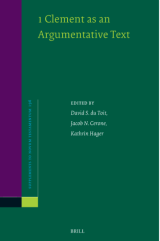
I have found an encouraging thread throughout the tapestry of this book.  Interest in Septuagint scholarship is on the rise. 

If you go into Southeastern’s library, you might find half a book shelf to a full book shelf worth of books on the Septuagint.  There is only one commentary series, that I am aware of, on the LXX…and it isn’t even complete.  The most critical version of the LXX, the Göttingen Septuagint, hasn’t been completed.  There is no complete Theology of the Septuagint.  A handful of LXX grammars exist, most of which were written in the late 18oo’s-1900’s.

Yet, interest is on the rise.  Do you know what interest means?  It means a greater desire/demand for scholarship in this area.  It also means that there is a massive amount of work to be done and a great deal of room for those interested in playing.

Translation?  Even if you are the fat kid in gym class afraid of not being picked for dodge ball, you won’t be left out.  I’m sure you’re thinking, “It can’t be that easy.”  You’re right, even the fat kid needs to know English, Greek, Hebrew, Latin, German and maybe French.  I hope he’s been eating languages and not pies.

Posted in LXX | Tagged | 1 Comment

“Idol Worship in Bel and the Dragon and Other Jewish Liturature from the Second Temple Period”

For those unfamiliar with the “Apocrypha,” the title Bel and the Dragon may sound like a child’s story.  Whatever you may think of the story, it is simply an addition to the book of Daniel and it has the topic of idolatry as its main interest.  Within this addition, Daniel confronts two foreign idols: Bel (an idol made of clay that supposedly eats and drinks the feast provided for him by supplicants) and the dragon (a live…well…dragon).  [spoiler alert]  They aren’t really gods.  Bel doesn’t eat and drink the meal provided him, instead the priests do.  The dragon can be and eventually is killed by Daniel’s ingenious plan to bake pitch, fat and hair into cakes and feed them to the dragon.  And now…to the article.

I must say that Claudia Bergmann’s article was one of the most pleasant and interesting reads in this book thus far.  Bergmann’s task is to compare idolatry in Second Temple Literature (~530BC-70AD).

Portrayal of Idols/Idolatry in the Hebrew Bible

  1. Idols are made with human hands
  2. Idols are inanimate (must be carried to and fro, picked up when they fall)
  3. Idols are powerless (when the impotence of idols is mentioned in the Hebrew text, it is often bracketed by praise of the LORD)
  4. Idols are perishable (they can be burned and destroyed, yet this is always done by God or as an agent of God).

Portrayal of Idols/Idolatry in 2nd Temple Lit

  1. Idols are manmade, inanimate, and powerless.
  2. Long lists of an idols inabilities virtually disappear
  3. Examination of the human psych for why humans worship idols occurs.
    1. It is an influence of cruel spirits
    2. Grief of the death brings about the immortalization of an individual
    3. Adoration of a ruler
    4. Profit
    5. A desire to have gods like the nations
  4. Comparison with the Living God is diminished
    1. Idol comparison is done with hesitancy and the material is no longer framed by praise of the LORD
    2. No mention of God’s acts, law, or covenant
    3. The text rarely ever refer to the creator/creation
    4. Bergmann postulates that this is due to the fact that topics like law, covenant, land, Exodus, and creation differintiated the Hebrews from being perceived as enlightened Hellenists.
  5. Destruction of Idols
    1. Idols are still destroyed through the wear-and-tear of elements, an inability to save themselves
    2.  Yet, idols are now destroyed by rational humans instead of by God or by humans acting as his agents

Bergmann now looks to Exodus 20:23; Jeremiah 10:6-8, 10 in order to compare the Greek and the Hebrew versions.  He observes that, while the Greek text generally is in agreement with its Hebrew parent text, when there are major differences between the texts the Greek text brought into harmony with the 2nd Temple ideology of idolatry.

Bergmann concludes the article with a look at Bel and the Dragon.  What is of most interest is the differences between the Old Greek version and Theodotion’s recension of Bel and the Dragon.  The OG version has leanings towards “wisdom literature.”  It suppresses elements about the LORD, softens the possible conversion of the Gentile king, and the destruction of the idols and priests is mitigated.  Theodotion’s  version has nationalistic leanings in that it recounts the utter destruction of the false priests, the destruction of the two idols, and the “possible” conversion of the king.

What is the main take away here?  Don’t eat baked tar, fat and hair.  Though it may smell tasty, if it can kill a dragon, it will most likely kill you!

Posted in LXX | Tagged | Leave a comment

“Messianism in the Septuagint”

It has been a while since I have provided you with some of my gleanings within the realm of LXX studies.  This is due in part because I took a break from posting about my reading and it is also because I took a break from reading.  Moving on, let’s make this summary quick and to the point.

Heinz-Josef Fabry takes up the task of analyzing the concept of messianism in the Septuagint.  It has been a longstanding assumption that the Septuagint brought with it a heightening of messianic themes.  Though there are a number of instances where previously non-messianic passages become messianic as well as a heightening of existing messianic passages takes place in the Septuagint, there also exists the tendency towards dismantling, reducing, and reinterpreting passages in the Hebrew Text that were messianic.  This is especially regarding passages that portray the coming messiah as prophet, priest and king.

What would have been the cause?  Fabry argues that the translators were attempting to loose messianism from its ancient constraints so that it might live anew in its current context.

Posted in LXX | Tagged | 1 Comment

Joshua, A Judge of Israel?

I came across an interesting passage in my translation of 1 Maccabees.  As an aside, some of you might be wondering why I am reading this book since it is not a part of the Protestant canon, but it might surprise you to know that it is a part of the LXX corpus (body of writings).  Also, it’s all about fidelity to the covenant and war.  Also, what American doesn’t like the idea of “Join or Die?”  After all, it was one of the rallying cries of the nation.  I fear I have wandered a bit off point.

What role in Israel’s history did Joshua play?  He assumes the role of Moses, who was in some capacity prophet, priest, and king, but he never seems to function in all the same capacities as his predecessor.  Was he simply a brilliant military strategist?  Was he a judge?  Matthias, the father of Judas Maccabeus, says, “Joshua, when he fulfilled the word [most likely referring to his faithful reconnaissance account] became a judge in Israel” (1 Macc 2:55).

Obviously this interpretation does not bear canonical weight.  Yet it is an interesting interpretation of the role of Joshua, especially considering the placement of Judges and the theory of a so-called octateuch (Pentateuch + Joshua, Judges and Ruth).

Posted in LXX | Tagged | Leave a comment

Word of the Day

It is not a good thing when you are translating along in a foreign language and come across a word you have no idea how to translate.  It is a far worse matter when you look up the translation for that word and discover that you don’t even know what the definition of that word is in your native tongue.  So…

ἐγκώμιον means “encomium.”  In fairness, the English word is derived from the Greek word (it is a transliteration).

An encomium is defined as “A speech or piece of writing that praises someone or something highly.”

And that’s today’s Word of the Day.

Posted in Uncategorized | Tagged | Leave a comment

Jazz: Her Bone and Housebreaking

Today I have observed two hilarious habits of the newest addition to our non-people family.

First, I have been trying to consistently reward Jazz with praise and affection for “potty-ing” outside.  Now, after “doing her business” she stays in the same position, making sure I know she was being good, and waits for me to say, “good girl, good potty.”  Immediately she darts to me, rolls over, and receives her reward; a good hearty back and belly rub.

Second, Jazz loves her bone.  As it happens, it is a point of contention between our two dogs.  If Tölpel has possession of the bone, she will bide her time until he has an irresistible itch.  Striking like a sneaky snake, she takes her newly obtained prize to “her territory.”

Posted in Dog Moments | Tagged | Leave a comment

Grassman’s Law

Before I begin, I think it best to clarify that Grassman’s Law has nothing to do with landscaping or this weird dude covered in fescue.  As many of you know, I have been working through Metzger ἵνα προστιθῶ πρὸς μου θησαυρον “in order that I might add to my storehouse.”  In the list “14 uses” is the word θύω “I sacrifice.”  This is a relatively easy word to memorize and I had it cold, so I thought.

When reading along in 1 Corinthians 5:7 I found the word ἐτύθη.  My initial impression was, this must be a noun.  After all, first declension feminine words are characterized by the η ending.  A second pass at the word revealed the past time morpheme (past time indicator) ε, as well as the aorist passive morpheme θη.  At this point, befuddlement found its home.  So I looked high and low, checked my lexicons and grammars…wait…I just highlighted the word and Accordance gave me the answer.  Cheating?  Yes, a bit…But I will tolerate no κρίμα here.

As the answer mysteriously revealed itself to me (no one truly knows how Accordance really works…I like to think a mini Plato, Aristotle or Dr. Black lives inside each program happily living out their days parsing Greek words for inadequate students, but that is a discussion for a different day), the details of Grassman’s Law slowly returned to me, producing one of those, “ahhhhhh ha, you tricky little devil” moments.

You see, ἐτύθη “e/tu/the” is from θυω “thu/o” (<- no, that is not a typo for thou).  Grassman’s Law states that two aspirates (some examples being φ, χ, θ, ξ, ψ) cannot coexist in two successive syllables within the same word.  Let’s look at θυω “thu/o.”  In order to put it in the aorist tense and passive voice, we must add the past time morpheme/augment ε + the root θυ + the aorist passive morpheme θη, which results in εθυθη “e/thu/the.”  A bit of a mouth full don’t you think?  According to Gramman’s Law, one of the aspirated consonants is deaspirated (thu->tu).  What is the result?  ἐτύθη “he was sacrificed.”

This is an easy rule, but when you encounter examples like this in the wild, which you have not been previously exposed to, the result is mild befuddlement.

Posted in Uncategorized | Tagged | Leave a comment

A Confession

At the end of my last semester at SEBTS I took up Dr. Black’s challenge to be in the languages everyday.  He promised that translating at least two verses a day would remarkably improve one’s ability to read and understand the language.

Wouldn’t you know, I went far beyond the stipulations.  I translated at least a paragraph from the Latin Vulgate, Hebrew Bible, and Greek New Testament.  I did this everyday for the past 4 months and my “skills” have greatly improved.  But sadly, my newfound obsession with Septuagint studies, vocabulary development/building, and the constant demands of the day have been a σκάνδαλον.  Until today I went two weeks without any deliberate attention in the languages (in my LXX studies I regularly translate Greek and Hebrew in order to compare the MT and LXX texts, but it is always as a means to understand the discourse at large).

In today’s reading I found myself in 1 Corinthians 4:3 and came across this phrase, “ἵνα ὑφ᾽ ὑμῶν ἀνακριθῶ ἤ ὑπὸ ἀνθρωπίνης ἡμέρας.”  Literally the phrase reads, “But it is a very small thing that I be judged by you or by a human day.”  A better translation might be “But it is a very small thing that I be judged by you or by a human court.”  While this expression might seem a bit odd, it makes perfect sense in Hebrew and has a number of parallels in other Greek texts.  I could go on about how this might be in contrast to a θεῖου ἡμέρας “divine court/divine day” or τῆς ἡμέρας ὀργῆς “the day of wrath.”

Instead, my main take away is this: there is nothing like encountering the text itself.  Reading in the language you are studying reinforces vocabulary and forces the reader to encounter idiomatic expressions on their own terms.  So, μεθύσκεσθε τῃ γλωσσῃ καὶ τῃ γραφῃ.

Posted in Uncategorized | Tagged | Leave a comment

Paul Was not Crucified for You, Was He?

My day began with a conversation with a close friend about the persistent nature of Christian jargon, it just won’t go away.  Even when one phrase is relegated to a bygone age a new turn of phrase is quickly coined and almost as quickly trivialized.

I made the observation that this was due to the fact that the church is filled with sheep.  We hurry to find our very own seat on a bandwagon driven by the latest and greatest teacher, whatever color his stripes might be (as it happens, my driver wears a tulip on the lapel of his shirt and often ponders at the ever fickle daises growing on the side of the road as he passes by).  We blithely ride our little wagons unaware of their final destination, content knowing that the ride is comfortable.

Is our sheepish nature as Christians inherently bad?  Is looking up to godly men and women unbiblical?  The answer to both of these questions is, no.  After all, Hebrews provides us with an extensive list of the heroes of the faith.  Paul tells his listeners to follow his example, insofar as he is living in accordance with the spirit of Christ.  Also, the Bible portrays Christ as the good shepherd and we his sheep.  Being brought into the fold of Christ by his death and resurrection requires that we become sheep, followers subservient to the will of the shepherd.

I don’t find it helpful when we are unable to have conversations about our faith with one another without the aid of our wagon driver’s name.  For example, the other day someone said to me, “Jacob, Dr. X, I’m sure you will like him…after all…he is very much like you, says Y and Z about topic A.”  Why is it that our knowledge of the Bible is in the form of the teachings of Rabbi Piper or Rabbi Driscoll?  This is not a criticism of either of these men.  Like Paul I would hope their response would also be “John Piper was not crucified for you, was he?”  Also, why is it that we act like we cannot associate ourselves with another brother because he does not accept the convictions of Rabbi Akin or Rabbi Horton?

Posted in Uncategorized | 1 Comment

“Interlinearity in 2 Esdras: A Test Case”

I have two important words for you today: isomorphism and anacoluthon.

Isomorphism “equal/same form,” as it applies to our subject of interest (you’re right, my subject of interest), is the method of translation that seeks to render form for form.  That is to say, if there is an article in the Hebrew there will be an article in the Greek.  If there is a preposition in Hebrew, there will be one in the Greek, and on it goes.  As it happens, Wooden adopts Pietersma’s interlinear/isomorphic model as his approach to the text of 2 Esdras.

The concept of isomorphism naturally leads to our second word, anacoluthon.  Anacoluthon literally means, “does not follow” and when applied to the analysis of texts it has special reference to an “error” in syntax.  Here’s an example, “The boy hit the ball to I.”  Instead of using the accusative form “me,” the author of this sentence has incorrectly used the nominative form “I.”

R. Glenn Wooden begins his article by supporting his claim that the text of 2 Esdras is best understood by an appeal to Pietersma’s interlinear model.  He argues that the presence of transliterations in instances where the Hebrew meaning eludes the translator, an almost flawless adherence to word order (1 alteration out of 65 verses analyzed ), and the imprecise rendering of conjunctions (waw translated with καί 154/166 times) support the notion that this text was meant to be read in reference to the Hebrew original.

This conclusion assists in his interpretation of 2 Ezd 9:1, which reads, “The people…were not separated from the peoples of the lands…in reference to the Chanani. The Heththi, the Pherezi, the Iebousi, the Ammoni, the Moab, the Mosri, and the Amori.”  This literalistic rendering of the LXX displays the anacoluthon present in the Greek.  Chanani is a dative of reference “in reference to the Chanani.”  This is an accurate rendering of the Hebrew’s lamad preposition.  Yet, the rest of the nations are in the nominative case (the case that is most often used for the subject or predicate).  The translator could have rendered all of the nations in the list as datives and avoided the whole issue, a perfectly “literal” option since the lamad preposition spans the list in the Hebrew original.  Wooden argues that the translator avoids this option because it would not be in tune with his isomorphic tendencies (i.e. one dative for one preposition).  Wooden further supports this observation with three other examples of anacoluthon within the book of 2 Esdras.

The translator’s slavish adherence to the Hebrew Text, even to the point of departure from viable Greek syntax, leads Wooden to conclude that the English translator has legitimate recourse to the Hebrew Text.  After all, the translator of 2 Esdras intended his translation to be read beside the Hebrew original.

Posted in LXX | Tagged | Leave a comment