Scripture And Hermeneutics Seminar 2013

This evening I attended the 2013 meeting of the Scripture and Hermeneutics Seminar. The topic of discussion: A Manifesto for Theological Interpretation. Three presentations were given. Southeastern’s own, Dr. Heath Thomas, gave the first presentation.

Heath Thomas
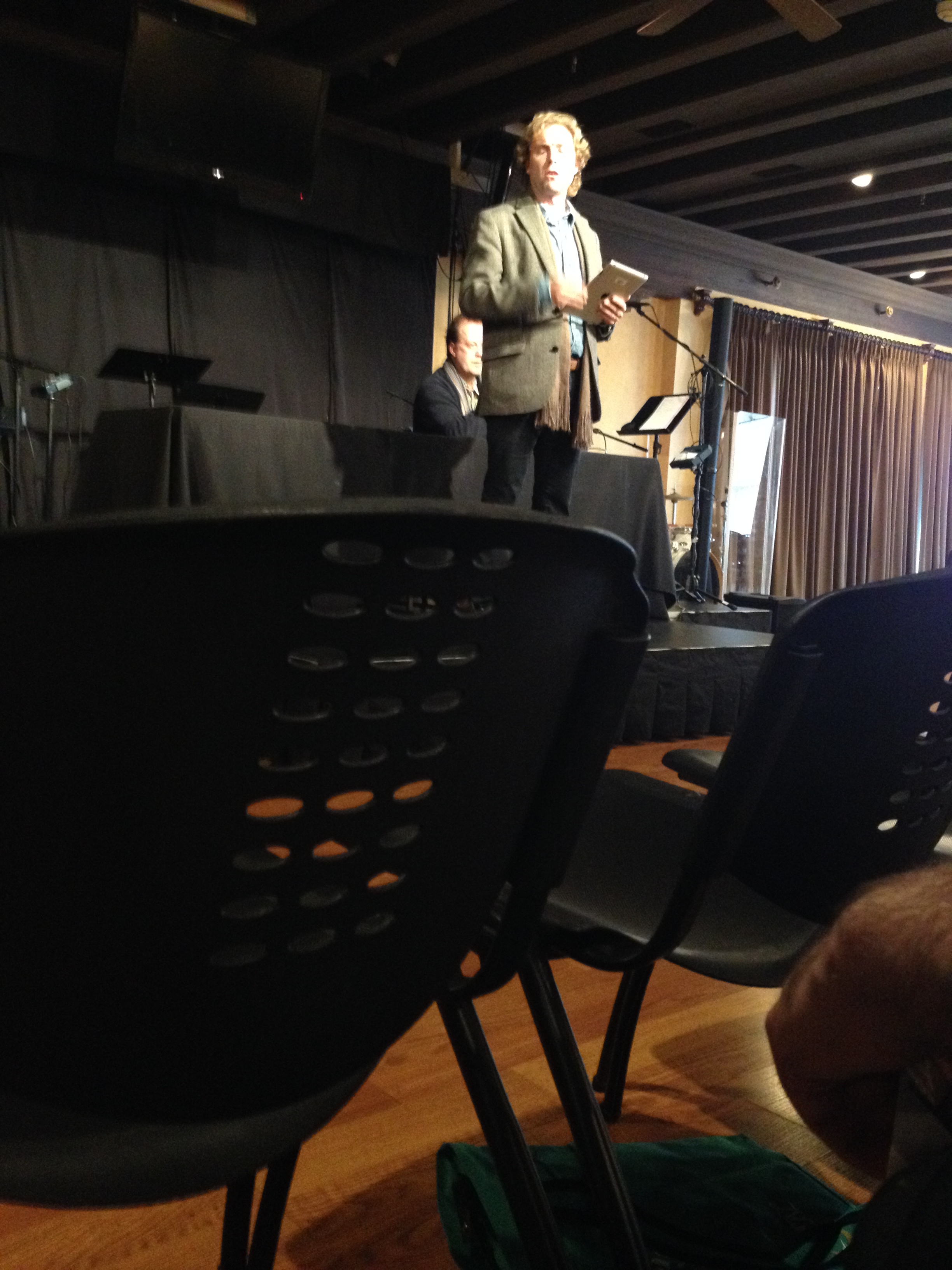
photo 1Dr. Thomas’s topic centered on “Scripture and Theological Interpretation.” Thomas asked us to consider the following questions:

  • How can we think about what Scripture is to the enterprise of theological interpretation?
  • What is the identity of Scripture?
    • It is the word of God
    • It is Trinitarian
    • It is for the church
  • Upon what authority is theological interpretation founded? Priority is given to the Scriptures.

Murray Rae

The second presentation was prepared by Murray Rae, though it was delivered by Dr. Thomas. Rae’s topic explored the interface between history and theological interpretation. How does historical inquiry interact with theological interpretation?

Rae proposes that a theological interpretation of Scripture begins with a historically grounded Christology. This means that interpreters, unlike most scholars engaged in the post-enlightenment interpretive enterprise, must begin with a hermeneutic of trust. Interpreters must approach the scriptural texts with a submissive and attentive ear, assuming that the authors of scripture provide reliable witness to the event and its significance. Such an interpretive enterprise will, of necessity, be kerygmatic.

If we begin with historical criticism, argues Rae, we have already conceded the battle. Our epistemological starting point matters. If we start in the wrong place, we will inevitably spin our wheels in frustration as we try to arrive at a living and active message for the church.

Craig Bartholomew
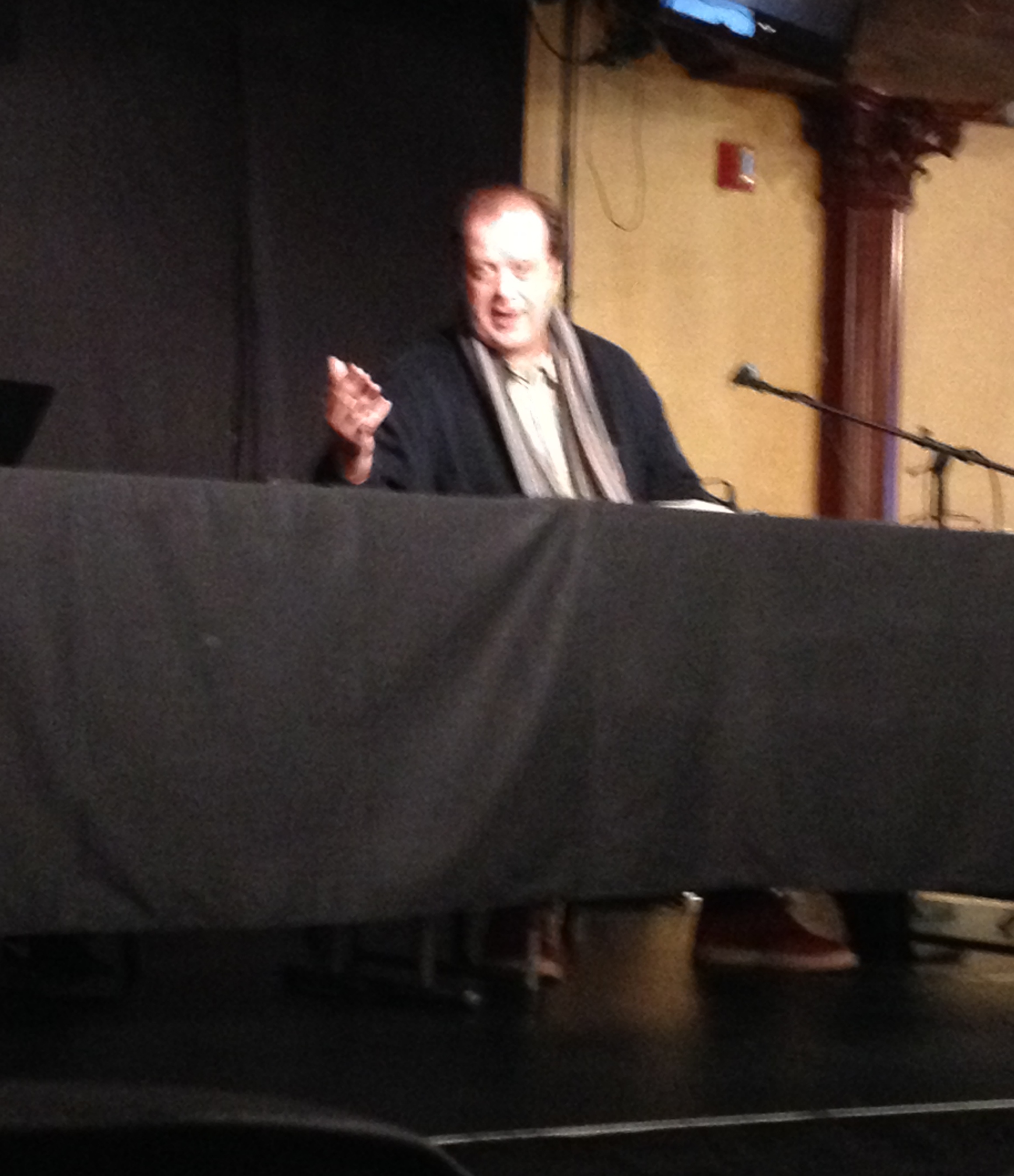
photo 3Finally, Craig Bartholomew spoke on the topic of Reading Scripture for All of Life. Bartholomew likened the biblical text to the pearl of great price. In order to find the pearl, we must dig, work hard, and set ourselves resolutely to the task. When it is found, the pearl reveals Christ. Scripture reveals Christ, the author of life and the God that says of the world, “this is mine.” Scripture leads us to the feet of someone; it leads us to the feet of Christ.

Bartholomew draws our attention to six points for reading the Bible for all of life:

  1. Recover an adequate Christology
    1. Our Christ is too small.
    2. We must expand our understanding of Christ; he is bigger.
  2. Retrieval of a robust doctrine of creation
    1. Scholarship has largely eclipsed the theme of creation.
    2. Without a solid understanding of beginnings, we do not fully know about redemption.
    3. Creation is the very stuff of redemption; God saves to make me fully human.
  3. Work that is not policed and controlled by mainstream scholarship
    1. We must not concede the epistemological ground.
    2. Scripture is for the church and is theological in nature.
  4. Be alert to the story of the Old Testament
    1. Israel is an Ancient Near Eastern nation.
    2. The Old Testament tells a story of God’s journey with Israel.
  5. The New Testament does not lose the holistic vision of life taught in the Old Testament, it universalizes it.
    1. The kingdom of God is not just about his reign.
    2. The kingdom of God includes his realm.
    3. We forget that before the Fall, God pronounced his creation good. His mission is to restore creation.
  6. Christ is the clue to hermeneutics.
    1. This is different than, “Christ is the answer, or key, to hermeneutics.”
    2. A clue must be pursued with all rigor.
    3. This is not an easy task.

Discussion

photo 2

After the presentations, the floor was opened to discussion. The great thing about this seminar is that discussion actually took place, a good hour and a half. Here is a snapshot of some of the more interesting questions for consideration (note: there were no readily given answers. This session was a period for the community to challenge the authors of the forthcoming Manifesto as well as offer potential avenues of fruitful discussion.

  • A great number of assumptions are being made that need to be acknowledged (i.e. reading scripture through explicitly Trinitarian and Christological lenses). What theological assumptions can we all agree on before engaging in this project?
  • There tends to be a certain rhetoric among those engaged in “theological interpretation” that they are the only ones that are or have interpreted Scripture theologically. What makes this Manifesto distinct?
  • How can this project engage with and learn from critical scholars who do their work from a “neutral” and “non-dogmatic/ecclesiastical” framework, and yet are integrally involved in the life of the church?

The SAHS has been and continues to be one of the highlights of my SBL experience. The seminar is couched within a liturgical framework. Prayer, the reading of Scripture, communal reading, and the fellowship of the saints are hallmarks of the meeting. After worshipping our great God through the study of his word, we depart from the church and break bread together (arugula, walnut, and fig salad, roasted chicken, and a chocolate pudding cake).

I thank God for the encouragement and fellowship of these brothers and sisters. It is a great joy to see and hear about their work for His kingdom.

Posted in SBL | Tagged , , , , , | Leave a comment

Esther: Page One of the Glossa Ordinaria

I thought that I might share a little of the work I have been doing. Below you will find the first 4 of 89 pages of the diglot I have been working on. The first page is of the Glossa. The following four include a transcription of the Glossa text (on the left) and my translation (on the right). The highlighted portion on page two indicates that I am still working on the translation.

Glossa-Esther-Page1

Esther-Glossa Diglot Page1


Esther-Glossa Diglot Page2

Esther-Glossa Diglot Page3


Esther-Glossa Diglot Page4

My goal is completely translate through the first 5 chapters of Esther before the end of the semester.

Posted in Latin | Tagged , , , | 1 Comment

Thoughts on Teaching New Testament Greek: Thomas Hudgins

Thomas Hudgins, a recent EdD grad from Southeastern Baptist Theological Seminary and freshly minted Greek professor at Capital Bible Seminary, has been sharing his thoughts on teaching the biblical languages. By no means does he claim to have it all figured out. After all, which of us does? Yet, I believe his thoughts will be of great worth to you. They have been for me. Below is a list of links to his posts in order of publication:

Above all, Thomas challenges each of us to orient ourselves around our students and their needs. We stop thinking that education is about the teacher or about the content alone. We must model Christ in the classroom, be attentive to the needs and learning styles of our students, and stop expecting that students will be internally motivated and inspire a love for the subject which produces internal motivation. Sound like a tall order? Indeed. But our job as educators is not an easy one.

Posted in Greek, Greek Resources, Teaching | Tagged , | Leave a comment

New Additions to the Library

photoThe following titles were added to my library yesterday:

  • David Alan Black’s, The Authorship of Hebrews: The Case for Paul
  • Michael Scott Woodward’s, The Glossa Ordinaria on Romans
  • N.T. Wright’s, Paul and the Faithfulness of God
  • Jan Joosten, Collected Studies on the Septuagint

I must say, I am quite jealous of my bookshelves. They will be the only ones able to benefit from the contents in these great tomes for some time.

Posted in Uncategorized | 4 Comments

Greenlee’s The Text of the New Testament: A Brief Review

So you want to learn about the field of New Testament textual criticism, but the task seems daunting. The vast number of manuscripts, the task of reconstructing the Word of God, and the subjective decisions that must be made on the basis of internal and external evidence can be a bit overwhelming. Harold Greenlee’s The Text of the New Testament, then, is the perfect resource for you.

Greenlee’s presentation of New Testament textual criticism is simple without being simplistic. Writing for students with little to no Greek knowledge, Greenlee introduces the novice to the subject without overtly technical language. He even avoids the use of Greek. (If I recall accurately, Greenlee used Greek less than 10 times throughout the entire work.) Instead, all illustrations from the Greek text, and there are many, are translated. In other words, the book is accessible to any and all.

Greenlee’s text is a delightful and quick read. Chapters include what the ancient books looked like (wax tablets, papyrus scrolls, and codices), how manuscripts were written, the ancient records of the Greek NT, how the Greek NT survived by copying throughout the centuries, changes undergone by the introduction of the printing press, how to determine the correct reading of a text (internal and external evidence), a look at the various types of variants (spelling variants, variants with no significant bearing on the meaning of the text, variant with some bearing on meaning, and longer variants), the Greek NT and modern translations, and a brief summary chapter.

As I mentioned, this was a delightful read. Greenlee tells a story of the tools of the scribal trade, the creation and transmission of the text throughout history, the evolution of the printed Greek text from Erasmus’ rushed edition to the NA27/UBS4, and the manner in which modern English translations engage in textual criticism. Greenlee has provided us with a true introduction we are given a fly over of the overall landscape of textual criticism. No topic is treated comprehensively or in depth. It is incumbent upon us to pick a hill, valley, stream, or patch of woods to explore in greater detail.

Posted in Book Reviews, Greek, Greek Resources, NT Greek | Tagged , | 4 Comments

Paul and the Faithfulness of God

My copy advanced copy of Paul and the Faithfulness of God has shipped. When I ordered the book, I was hoping to finish the previous volumes before the newest arrived. Needless to say the demands of the semester have prevented that. Here’s to hoping I will be able to get to it soon!

Posted in Uncategorized | Leave a comment

Becky Black

Last night I was at Becky Black’s visitation. The entire time I was there I couldn’t help but reflect on what I knew of her and how she lived as a humble and godly example of a life lived out for Christ. The words of Chrysostom, which I came across earlier in the week, would not escape me.

For it is not possible to obtain glory by any other way, except fleeing from glory. For while we pursue it, it flees from us. When we flee from it, it follows us. If you want to be glorious, do not covet glory. If you wish to be high, do not make yourself high. All honor those who are not seeking honor. They despise, however, the ambitious man. For the human race is found of contention and stubbornness.

Let us therefore despise glory. For thus we are able to be humble, or be exalted. Do not desire to lift yourself up, that you might be exalted by another. He that exalts himself, is not exalted by others. Great is the evil of pride.

These words could not be more true of what I know of the life of Becky Black. Though she only sought the glory of her God and King, she will forever be remembered for the great deeds she did in His service. Paul says that the Thessalonians became imitators of the Lord and of him so much so that they became an example to all who believe in Macedonia and Achaia (1 Thess 1:1-10). In a similar manner, Becky has imitated her Lord and has become and example for us to follow. Praise God for a life well lived.

Posted in Uncategorized | 2 Comments

A Latin Scholar in the Making

photoLittle Elijah is determined to start early. We were sitting together and he started reaching for my Dictionary of Ecclesiastical Latin. There’s gotta be something to say for knowing what you want to do early in life.

Posted in Latin, Life | Leave a comment

Matchbook

Kindle Matchbook debuts today. The Kindle version of select titles are available for very low prices (or free) if you previously purchased a physical copy of that book. All you have to do is log into your account through the link I provided, and Amazon searches your book purchases through Amazon for the past 18 years. A list is generated for you of books that qualify along with their respective cost. More titles will be added in the future. Happy purchasing.

Posted in Uncategorized | 2 Comments

Typos and Translation

I love the translation work I do. There are few things in the world of research that make me happier than translating a difficult passage. My work in the Glossa Ordinaria, however, has the tendency to drive me crazy. It isn’t the translation process that drives me crazy. No. The process of determining the text is the part of the process that makes me want to pull out what little hair I have left.

Sure, this process has gotten easier. I have learned a great number of abbreviations. For instance:

  • qd = quod
  • populū = populum (the dash over a letter typically indicates one of three things: the accusative case, the letter “n,” or the letter “m”)
  • a seemingly unnecessary frill on an “a” or “o” = ae and oe respectively
  • ę = ae

I have also learned that many letters look alike:

  • “s” and “f” inside a word are easily confused.
  • “t” and “r” are sometimes difficult to distinguish.
  • “c” and “e” look almost identical.
  • When typed side by side, it is almost impossible to tell these letters apart: “l” “s” “f” “t.”

I say all of this to let you know that I have learned a great deal. I have drastically reduced the amount of time required to transcribe the Glossa and proceed to translation. This latest encounter, however, was a bit of a thorn in my side. I spent at least 30 minutes trying to figure it out, abandoned it to translate the rest of the section, and returned only to spend another 30 minutes.

Screen Shot 2013-10-28 at 10.22.15 PMIn this picture, look at the underlined word. There is no way that a word has three successive “n”s. This alone was enough to indicate that something was wrong. Furthermore, there is a “t” in the word, or is it an “r?” I searched for every combination. Was this a misprint? Were too many “n”s added accidentally. So I tried “denntiando,” “dentiando,” “dennriando,” “denriando.” Nope, none of that worked. Could two of the “n”s be combined to be an “m.” I tried all those combinations. Can you guess what the solution was?

The Glossa was produced during the era of movable type. Each character would have to be individually set into place. Yep. You guessed it. One of those “n”s is supposed to be a “u”; it’s just flipped the wrong way. Our word should be “denuntiando” from “denuntio,” which means “to warn, threaten, announce, etc.”

The moral of this story? Knowing vocabulary saves a great deal of time. I doubt I will forget what “denuntio” means for some time! Oh, and the other moral of this story . . . let your wife google search the word for you and allow google suggestions to offer a suggestion. Thanks love!

Posted in Latin | Tagged , , | 1 Comment