

-
My Books


Blog Roll
aBowden Blog
Brian Renshaw
CAC Greek
Cataclysmic
Dave Black Online
Doctrinae Coram Deo
ΕΝ ΕΦΕΣΩ
Jason P. Kees
Jesus Plus Nothing Equals Everything
LXXI
Nathaniel Cooley
New Testament Greek Geek
New Testament Greek Portal
NT Discourse
Old School Script
Our Great Adventure
Paroikos Bible Blog
Pious Wishes
Secundum Scripturas
The Jesus Question
Theological Musings
Theological Discourse
Words on the Word-
Recent Posts
Archives
- September 2025
- September 2021
- February 2021
- October 2020
- September 2019
- April 2019
- September 2018
- March 2018
- December 2017
- October 2017
- August 2017
- June 2017
- April 2017
- October 2016
- September 2016
- August 2016
- July 2016
- June 2016
- May 2016
- April 2016
- March 2016
- February 2016
- January 2016
- December 2015
- November 2015
- August 2015
- June 2015
- May 2015
- April 2015
- March 2015
- February 2015
- January 2015
- December 2014
- November 2014
- October 2014
- September 2014
- August 2014
- July 2014
- June 2014
- May 2014
- April 2014
- March 2014
- February 2014
- January 2014
- December 2013
- November 2013
- October 2013
- September 2013
- August 2013
- July 2013
- June 2013
- May 2013
- April 2013
- March 2013
- February 2013
- January 2013
- December 2012
- November 2012
- October 2012
- September 2012
- August 2012
- July 2012
- June 2012
- May 2012
- April 2012
- March 2012
- February 2012
- January 2012
- December 2011
- November 2011
Categories
- Apostolic Fathers
- Biblical Studies
- Book Giveaway
- Book Reviews
- Discipleship
- Discourse Analysis
- Dog Moments
- Early Church Writings
- Exegesis
- German
- Greek
- Greek Morphology
- Greek Resources
- Hebrew
- Hermeneutics
- Jonah
- Jonah 1:13
- Latin
- Life
- Literary Analysis
- Logos
- LXX
- Name That Author
- New Testament Studies
- NT Codices
- NT Greek
- Old Testament Studies
- Perseus Web Lookup
- Quotes
- Religion
- Sarcasm
- SBL
- Teaching
- Translation Tuesdays
- Uncategorized
Meta
Dr. Jennifer Knust on PA
Dr. Knust begins her presentation.
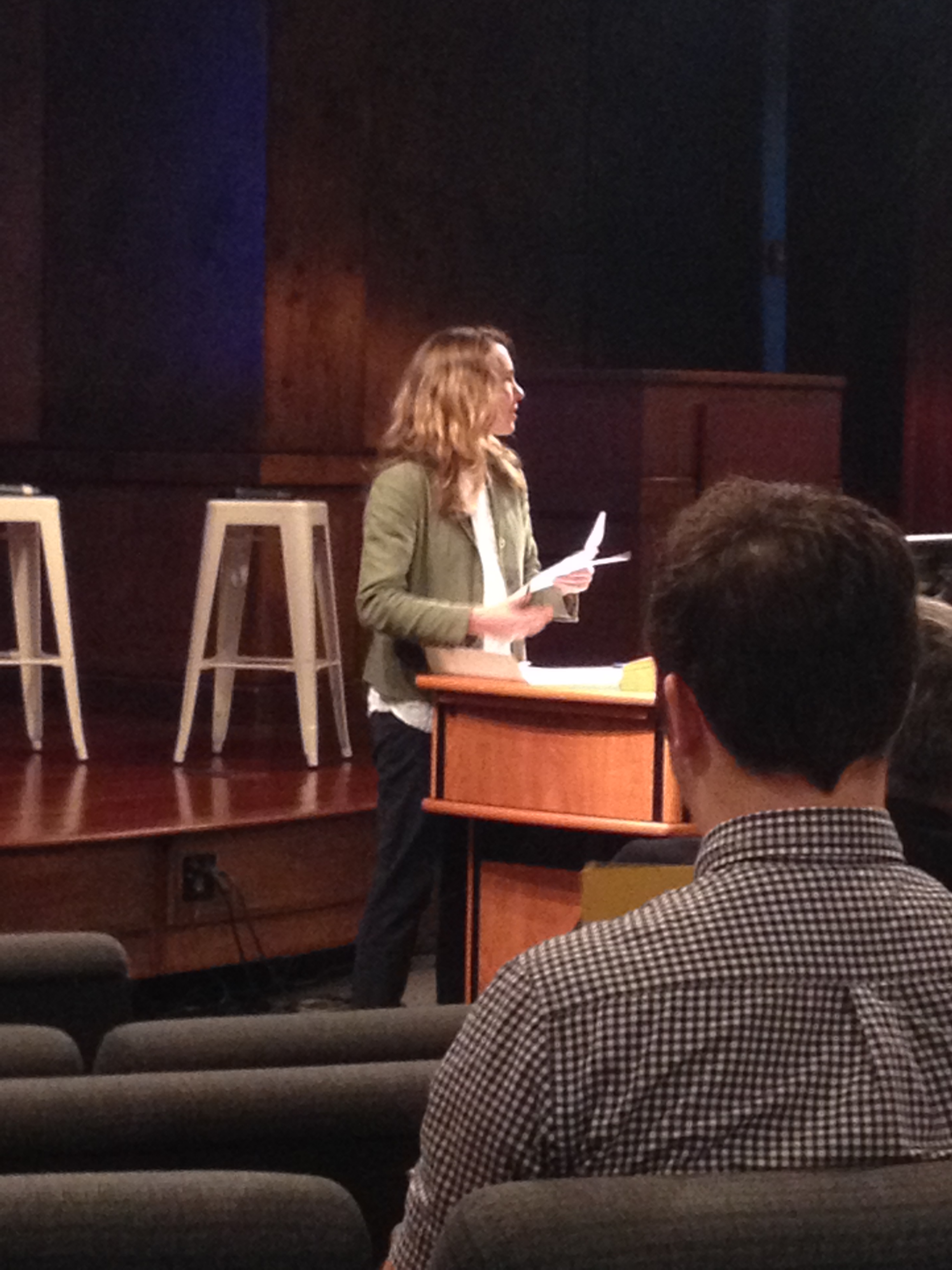
Jennifer began her presentation by thanking the sponsors and the southern hospitality she has experienced while here!
While Dr. Wasserman looked at the textual evidence of the PA, Dr. Knust’s treatment looks at the patristic evidence. The arguments made by these scholars will appear in a future publication on the PA.
Jennifer’s assessment of the Patristic evidence finds that it is unlikely that the PA was suppressed for moral reasons. Just yesterday, Dr. Punch argued for precisely this theory: that the text was suppressed on pious grounds. I can’t wait for the panel discussion!
Dr. Knust provides us with a thorough look at the church father’s heavy censure of scribal omissions. The fathers would not have looked kindly on intentional omissions. In light of this evidence, Dr. Knust finds it highly unlikely that a passage as long as the PA would have been intentionally omitted, especially as widely and thoroughly as would have been necessary considering the late evidence for the PA.
Now, Jennifer has moved away from a general discussion of the father’s disdain for adding to or taking away from the manuscripts to a discussion of Origen. Knust’s use of Origen supports the theory that problematic texts would not have been to expunge them. Instead, the scribal practice would have been to use a mark to signify the spurious nature of the passage. As a matter of fact, the later Byzantine manuscripts bear this very mark.
Posted in Uncategorized
Leave a comment
Dr. Tommy Wasserman on PA
Dr. Tommy Wasserman begins his session. He is a world class Textual Critic, and I’m looking forward to hearing what he has to say.
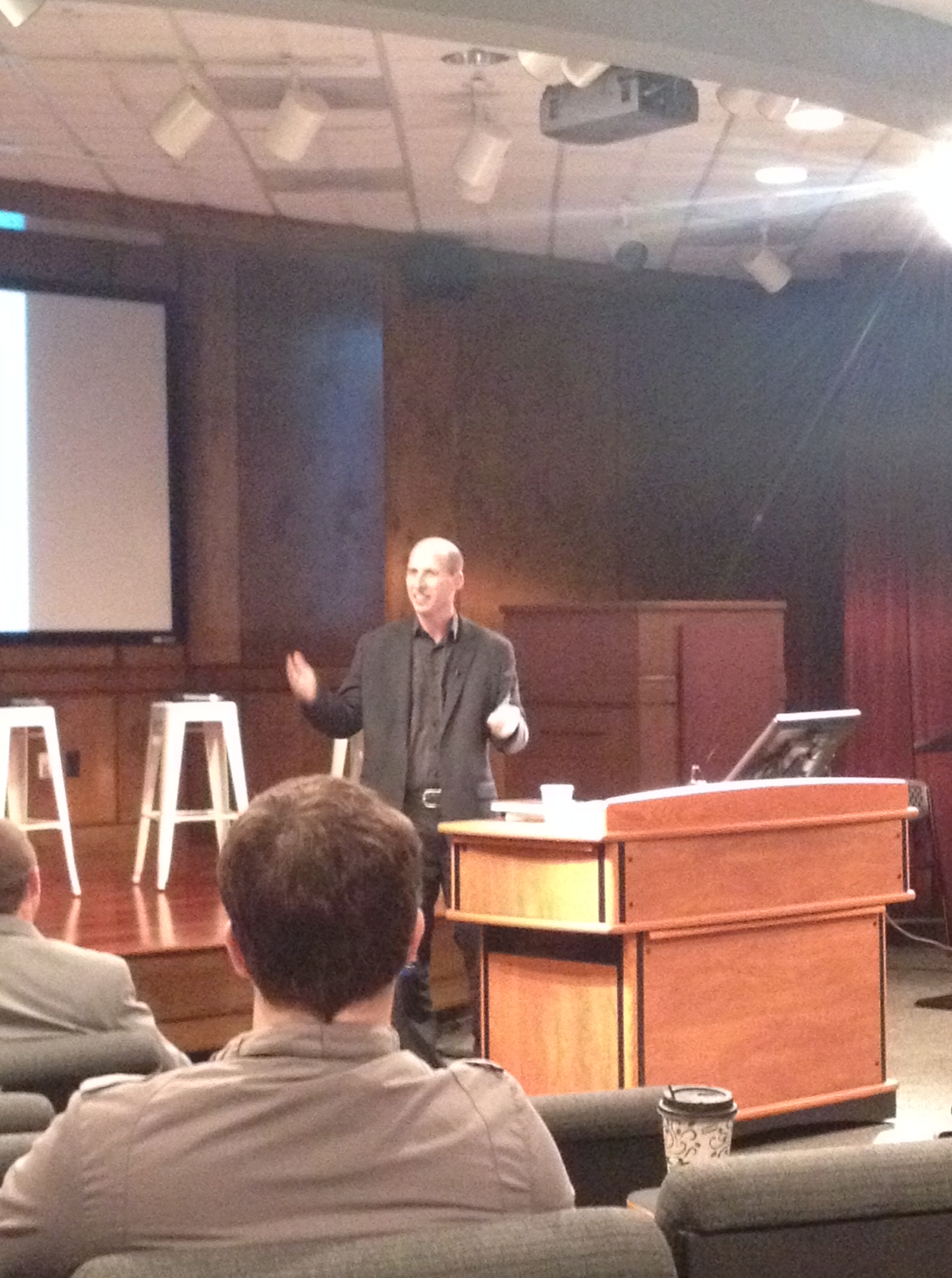
Dr. Wasserman begins by noting the division over the inclusion of PA. He humorously notes that two of our own SEBTS professors are divided. Dr. Köstenberger does not even include the passage in his Baker Exegetical Commentary, whereas Dr. Robinson avidly contends for its originality. Dr. Wasserman asks SEBTS students to pick our favorite passage [edit: professor].
Wasserman cites Royce’s important study of the papyri and their overall tendency towards omission rather than omission [edit: addition]. Despite this tendency, the omissions of these texts are usually 1-2 words, not whole texts. Dr. Wasserman concludes that these major redactional sections appear to have been added, not omitted from the texts.
Posted in Uncategorized
4 Comments
Dr. Punch on the PA
Dr. Punch’s lecture is divided into 3 parts:
- Context
- Grammar and Syntax
- External Evidence (textual and patristic)
In the context section, Dr. Punch makes a number of connections within the overall context of John demonstrating that the content of the PA is altogether consistent with the book’s immediate context. The immediately context is concerned with the interpretation of the law, Jesus’s act of writing on the ground with his finger alludes to Moses’ reception of the law where God wrote with his finger, etc.
Concerning the Grammar and Syntax, Dr. Punch observers that there are both non-Johannine terms and features as well as features that are distinctively Johannine. For instance, the use of the κάτα prefix is not used often within John. The PA, however is filled with the prefix. Dr. Punch argues, however, that the addition of the prefix in a context that is specifically concerned with judgment (κρίνω) may heighten the intensity of each term. Punch highlights John’s distinctive use of διδάσκαλε, Moses imagery, the vocative γύναι, μηκέτι ἁμαρτανε, λιτθάζω, λίθος, and the Johannine aside. All of these distinctive elements are included within the PA.
Finally, regarding the Patristic evidence, Punch cites Papias, The Infancy Gospel of James, Didascilla Apostolorum, Didymus the Blind, Jerome, Ambrose, Augustine, etc. as evidence of the early knowledge of the story and support for its originality.
Now for the Q&A section.
Posted in Uncategorized
Leave a comment
PA Introduction
The conference is underway. Dr. Black is currently introducing the conference. This is another in a long series of Textual Critical conferences that addresses controversial subjects in the field. There was the conference on the long ending of Mark, various methodological approaches within the field of TC, etc.
The speakers are:
- Dr. John David Punch
- Dr. Tommy Wasserman
- Dr. Jennifer Knust
- Dr. Chris Keith
- Dr. Maurice Robinson

Posted in Uncategorized
Leave a comment
Ethiopian Food
Last month when I was in Baltimore, I went out with the gang for Ethiopian. I made sure that Mary Beth knew about it so that I might incite in her a bit of jealousy. I didn’t want to make her jealous in the, I have but you have not sort of way. I wanted to ensure that she would remind me numerous times before we leave NC to go out for Ethiopian food.
This evening we did just that. We went out to eat at Ashee in Cary, NC. Mary Beth and I split the Keyi Tibs Wot (beef stew) and the Yebeg Alicha (Goat/Lamb stew).

Before

After
Do you think I liked it? You bet! Becky Black wrote in her autobiography:
An absolute favorite time at Bingham was Friday suppers, when the meal was served outside: all-you-can eat enjera b‘ wot, the national food of Ethiopia. I would get my food, move only a short distance away, eat, and be back for seconds before anyone else could turn around!”
That is exactly how I feel every time I have Ethiopian. I can’t slow down. It doesn’t take long after the meal is over for me to start again.
Posted in Uncategorized
Leave a comment
Pericope Adulterae
 Here’s a quick reminder about the Pericope Adulterae conference being held at SEBTS this weekend. I hope to see you there.
Whether or not you are able to make it, keep you eyes tuned to social media. We will be tweeting using #paconf. I will also make it a priority to blog about the goings on while there.
Excerpt from Ælfric’s Colloqu
Here’s a fun little passage on learning. Enjoy.
Nos pueri rogamus te, magister, ut doceas nos loqui latialiter recte, quia idiote sumus et corrupte loquimur. Quid uultis loqui? Quid curamus quid loquamur, nisi recta locutio sit et utilis, non anilis aut turpis. Uultis flagellari in discendo? Carius est nobis flagellari pro doctrina quam nescire. Sed scimus te mansuetum esse et nolle inferre plagas nobis, nisi cogaris a nobis.
STUDENTS: We children ask you, teacher, that you might teach us to speak proper Latin, because we are uneducated and we speak corrupt Latin.
TEACHER: What do you desire to say?
STUDENTS: That which we care that we speak, except it might be proper speech and useful, neither old womanish or vulgar.
TEACHER: Do you desire to be beaten while learning?
STUDENTS: It is more dear to us to be beaten for teaching than to be ignorant. But we know that you are kind and do not desire to inflict blows upon us, unless you are compelled by us.
Posted in Latin
4 Comments
A Clitic in Jonah
About a year and a half ago I sat in on Larry Perkins’ paper at SBL Chicago entitled “The Order of Pronominal Clitics in Greek Exodus – An Indicator of the Translator’s Intentionality.” You can read about my summary of the presentation and Perkins’ findings here. At the time I thought the paper was fascinating, but wasn’t entirely sure it would be anything other than…well…fascinating.
As I was working through Jonah 1:9 today, I found a perfect example of what Perkins was talking about. Here’s what I wrote:
| מַה־ | מְּלַאכְתְּךָ֙ | |
| τίς | σου ἡ ἐργασία | ἐστί; |
The first question hurled at Jonah concerns his occupation. Sasson notes that it may seem odd to modern readers that this would be the first question the sailors ask. It is customary in common parlance first to ask a person’s name.[1] He goes on to observe that this should not strike us as odd. The sailors are on the cusp of death frantically trying to circumvent their inevitable fate. We would only expect the most important question to be placed first. After all, and as the reader already knows, it is precisely Jonah’s occupation and his flight from duty that has created the problem.[2] The LXX translator seems to pick up on the importance of this question as well. Larry Perkins argues that the normal word order for clitics (words like μου and σου) in the LXX follows Hebrew syntax: noun + pronoun. Where this order is reversed, however, the translator recognizes and marks significant development within the narrative.[3] The translator of Jonah 1:8d places the pronoun σου before the noun it possesses. Of the nineteen instances of μου or σου in Jonah, this is the only instance where the translator places it before the noun. He means to draw the reader’s attention to this question. How will Jonah answer this probing question? What will the sailors do when they learn what the reader has known all along? The subsequent questions slow the narrative down creating tension as the reader dwells on these questions and their implications.
[1] Jack Sasson, Jonah, 113.
[3] Larry Perkins, “The Order of Pronominal Clitics in Greek Exodus – An Indicator of the Translator’s Intentionality” (paper presented at the annual meeting of the SBL, Chicago, Il., 11/18/2012).
Posted in Uncategorized
5 Comments
Jonah 1:8–9
I am having some difficulties in understanding Jonah 1:8–9. It’s not in the translation of the passage. That is rather straightforward. It is in the structure, and in Jonah’s response. In Jonah 1:8, the sailors hail a barrage of questions at Jonah:
וַיֹּאמְר֣וּ אֵלָ֔יו הַגִּידָה־נָּ֣א לָ֔נוּ בַּאֲשֶׁ֛ר לְמִי־הָרָעָ֥ה הַזֹּ֖את לָ֑נוּ מַה־מְּלַאכְתְּךָ֙ וּמֵאַ֣יִן תָּב֔וֹא מָ֣ה אַרְצֶ֔ךָ וְאֵֽי־מִזֶּ֥ה עַ֖ם אָֽתָּה׃
And they said to him, “Tell us on whose account this evil is among us. What is your occupation and where are you from? What land do you come from and what people?
Jonah’s response seems incongruous to modern readers:
וַיֹּ֥אמֶר אֲלֵיהֶ֖ם עִבְרִ֣י אָנֹ֑כִי וְאֶת־יְהוָ֞ה אֱלֹהֵ֤י הַשָּׁמַ֙יִם֙ אֲנִ֣י יָרֵ֔א אֲשֶׁר־עָשָׂ֥ה אֶת־הַיָּ֖ם וְאֶת־הַיַּבָּשָֽׁה׃
And he said to them, “I am a Hebrew, and the Lord God of the heavens I fear, who made the sea and the dry land.
The question that consumes interpretive discussions is whether or not Jonah has answered any of the questions asked by the sailors. I have read countless takes on this passage with no agreement.
Youngblood suggests that all of the questions are summed up in “on whose account this evil is among us.” The sailors what to know what God is responsible for the storm. Occupation, home, land, and can be governed by different gods in the ancient world. Knowing all this information might help to locate the specific god responsible.
While I certainly agree that Youngblood has provided an excellent analysis of the passage, I wonder if there is a more nuanced structure at work.
The clause, “Tell us on whose account this evil is among us” does indeed strike me as a summary for the questions that follow. It is not, however a question in and of itself. The following four questions are joined by only two conjunctions producing was seems to be only two compounded questions:
- What is your occupation and where are you from?
- What land do you come from and what people?
If this is correct, then Jonah’s response makes greater sense. He begins by answering the last series of questions and proceeds to answer the first series. This produces a chiastic structure as follows:
A What is your occupation and where are you from?
B What land do you come from and what people?
B’ I am a Hebrew
A’ And I fear/worship the Lord God who made the sea and the dry land.
The fact that Jonah is a Hebrew answers the questions concerning his native land and his people. I admit that the link between A and A’ is strained. Part of the strain is place on the link between occupation and “where are you from” in A by the use of the conjunction ו. This is further strained by the fact that we must construe Jonah’s confessional response as somehow related to his prophetic office in order to view it as an answer to the question of occupation. The confession and the office are not difficult to connect. The difficulty is whether or not the sailors would have in any way understood this as an answer to the question “what is your occupation?”
The Septuagint has issues of its own. First, the LXX translator adds καί so that each clause is linked with a conjunction. Second, he has misunderstood the consonantal text rendering עברי as δουλος producing the translation “I am a servant of the Lord” instead of “I am a Hebrew.” Furthermore, the verb σεβομαι is used instead of φοβεομαι. When lined up, the questions and answers look like this:
1) What is your occupation
2) And where are you from?
3) And what land do you come from
4) And what people are you from?
1)’ I am a servant of the Lord
1)’ And I worship the Lord God of of the heaven who made the sea and dry land.
In the LXX, Jonah specifically answers only the first questions. The rest of the questions, however, might be inferred by his use of the divine name. The Hebrews, who hail from Israel, worship YHWH.
In both the MT and the LXX, the sailors’ overall concern for the identify of the God responsible for the storm is answered. It is a matter of great difficult, however, in construing the nature of their questions and Jonah’s response. Any help in the comments section would be greatly appreciated.
Posted in Greek, Jonah, LXX, Old Testament Studies
1 Comment
 ἐνθύμησις