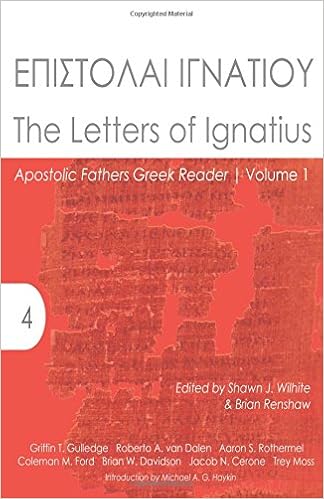
My Undergraduate Degree

I just found this link over at Dr. Black’s Blog. While Dr. Black’s alma mater takes pride of place as the best place to go for an undergraduate Bible degree, Moody Bible Institute takes a respectable second.

The first paragraph about Moody reads:

Chicago-based Moody Bible Institute is perhaps the clearest example of a pure Bible school at the undergraduate level. Think “seminary” for undergraduates.

A very interesting article. I must say, though, that I hope Moody education hasn’t doubled  in cost in the ~4 years since I left. That would be sad.

Posted in Life | Leave a comment

Greek Grammar I

I hope to see you tonight at Cary Alliance Church 7:00 PM – 8:30 PM as we begin an exciting journey through biblical Greek Grammar. Tonight we will learn the Greek alphabet, punctuation, accents, and pronunciation. If you can’t be there in person, you can always catch the video tomorrow afternoon here.

Posted in Greek, Greek Resources, Teaching | 3 Comments

Bible Vocab: A Review

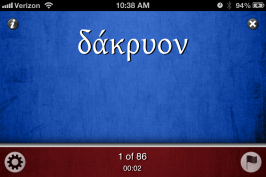
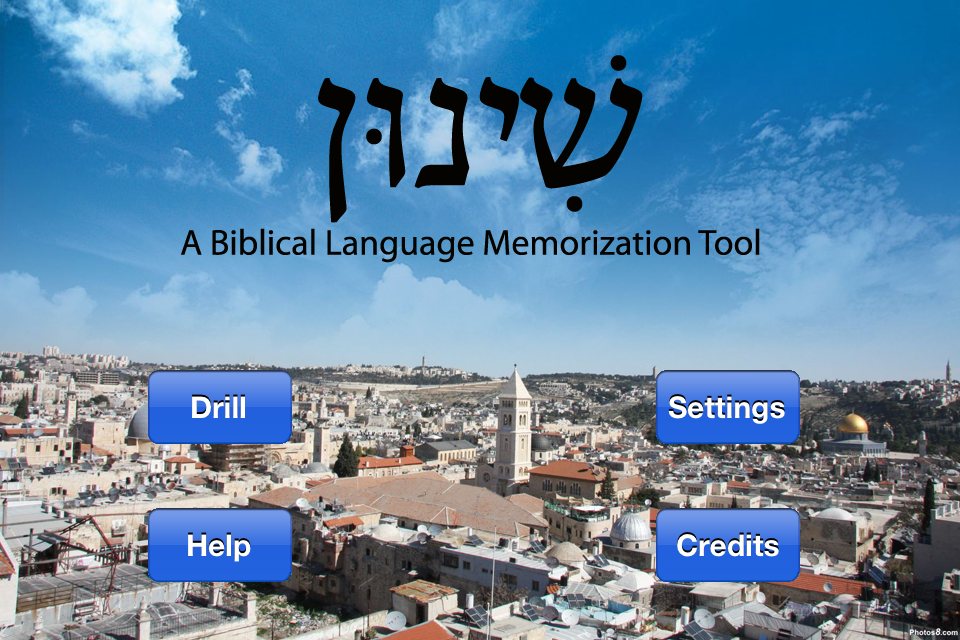
photoI have long searched for a great Biblical Hebrew and Greek vocabulary building app. Sure, many are adequate, some are good but the hunt for a truly great app has eluded me.   Robert Andrew Young’s Shinun app came close. Shinun is only $4.99 and includes Hebrew and Greek vocabulary sets tied to virtually all the major Greek and Hebrew textbooks. But there are a few drawbacks: flipping the card isn’t as intuitive as I would like (you have to swipe up or down instead of swiping or tapping); once a card has been flipped, it must be flipped back or, when you move to the next card, its backside will be revealed; you cannot go back to the previous card; and the overall GUI is decent but is not intuitive.

photo-1

[Edit: Please note that a newer version of Bible Vocab is available. The new version of the paid app can be found is Bible Pro+ and is $5.99. You can watch a Tutorial video that features all of its capabilities here.]

That being said, I think that I have found a truly great app: Rob Turnbull’s Bible Vocab. Bible Vocab comes equipped with every occurrence of every Hebrew and Greek word form the Old and New Testaments respectively. The free version will only let you create sets with ten words. For a cheap $5.99, you can get the full version. With the amount of work Rob Turnbull put into this product, you are virtually stealing it. Compare this price with Zondervan’s extortion of struggling seminary students ($20.99 for a vocab app).

The vocabulary is organized according to biblical passages. Say, for instance, you are studying the book of Philippians. You need to learn the vocabulary for the entire book because you know that your professor will chose a passage from anywhere in the book for your final exam. You don’t have time to make vocabulary cards for the entire book. You no longer have to. Pull up Bible Vocab, select the start verse (Phil 1:1), select the end verse (Phil 4:23), click add.

Extrapolating out from this principle, you can create lists that span the vocabulary for the entire New Testament (start verse is Matt. 1:1, end verse is Rev. 22:21). You might say, “Why would I want a vocabulary set that big? Well, you can limit the occurrences that will appear in your list. If you need to create sets for Metzger’s vocabulary list, then simply select 500+ occurrences.

The graphics are aesthetically pleasing. The GUI is intuitive. You can flag cards for further study. You can go back to words that you have skipped over. You can select multiple lists, which you have created, to study together.

Another major feature of the app is that it can be used alongside your translation as a parsing guide. Create the list for the passage you are currently studying. Select the list for study. Choose the “parsing” option instead of the “vocabulary” option. Each word will appear as it does in your Greek text for that passage with the definition. The backside of the card includes parsing information. [[Edit: Thank you Doug for pointing out that the Hebrew side of the application does not have the parsing feature.]]

If you are still with me, I must mention that there is a missing element. There are no pre-made lists according to the major grammars. This means that the app will primarily serve exegesis students instead of Greek Grammar I and II students. I plan on contacting the developer to resolve this. If he does decide to implement this feature, I will have to revise my review from great app to glorious app. You think I can also convince him to do this for the vocabulary of the Septuagint as well?

[[edit: Students who use either the UBS4 or NA27/8, which is pretty much everyone, should note that the vocabulary is based on Westcott-Hort’s Greek text. This means that the vocabulary will differ at points from your text]]

Posted in Greek, Greek Resources | Tagged , | 5 Comments

Why Study Greek?: An Interview with David Alan Black

Recently, I had the opportunity to talk with Dr. Black on the topic, “Why should I study/teach Greek in the context of the local church?” You can find that interview here.

Posted in Greek, Teaching | Tagged | Leave a comment

Prophetic Faithfulness

In preparation for my class on the Hebrew text of Ezekiel I have been reading through Block’s commentary on the book. I am ~150 pages into his 2 volume work that spans ~1800, so I have just scratched the surface. Anyways, I would like to share a quote from Block on Ezekiel 3:16-21.

The messenger of God is called not to success but to faithfulness. This principle, announced earlier in the commissioning account, is hereby reiterated with much greater force. Sentimental standards of fairness object when a negligent sentry is held responsible for the death of the wicked, but is not credited when lives are saved because of his faithfulness. But this problem arises from a fundamental misconception of the role of the prophet. The prophet’s call is not to “save souls” (which is God’s affair), but to proclaim the message he receives from the divine Commissioner. Faithfulness in service is measured not by effectiveness but by fidelity to the divine charge.

Likewise, the divine charge given to every minister of the Gospel is to faithful deliver the Word of God to his congregation and to the lost and dying world.

Posted in Quotes | Tagged , | Leave a comment

The Mother-in-Law–Jeremiah 29:11 Refrigerator Magnet–Diet Principle

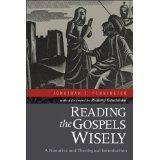
ref=sr_1_2I have been reading Jonathan Pennington’s Reading the Gospels Wisely: A Narrative and Theological Introduction. In chapter 7, Pennington addresses matters pertaining to “Intent,” “Meaning,” and “Posture.” At the conclusion of the chapter he talks about “The Mother-in-Law–Jeremiah 29:11 Refrigerator Magnet–Diet Principle.” This illustration poignantly brings home the points that he has been discussing, and I would like to share this with you.

I want to begin by saying two things. First, the following extensive quote was a kick in the gut. Second, my conviction and the illustration itself is in no way a reference to my mother-in-law. If I were to say anything at all about my mother-in-law it is that she is an astute reader of the text with good “posture” (as Pennington puts it).

To conclude, we may illustrate this ecclesial or Christian reading of Scripture with what I call the “Mother-in-Law–Jeremiah 29:11 Refrigerator Magnet–Diet Principle.” Now imagine yourself as a young, male seminary student with a semi-educated, somewhat emotional, faithful churchgoing but biblically untrained mother-in-law. You like her well enough, but as your own seminary training his increased your exegetical skills, knowledge of church history, and theological acumen, you have found a corresponding increase in discomfort when talking to her about God and the Bible. She’s very passionate about the latest devotional book she’s reading and new insights she has gained into passages of Scripture from looking up Greek words in Vines Expository Dictionary. Every time you see her, you sense with increasing intensity that she could be on the cover of the next edition of Carson’s Exegetical Fallacies. On your better days you just nod and smile politely. In your grouchy moments you daydream about ripping the books out of her hands, mocking them, stomping on them a few times, and throwing them into the fireplace while quoting Greek paradigms. But then when you arrive at her house one Thanksgiving, you see something that pushes you over the edge. On the refrigerator, holding up her unrealistic diet plan, is a magnet with a nice flowing script of Jeremiah 29:11–”For I know the plans I have for you,” says the Lord. “They are plans for good and not for disaster, to give you a future and a hope.” It is obvious that this verse and this diet plan are organically related in her mind. She is taking this verse to heart every day as a promise from God for her success in shedding a few pounds.

How will you respond? You’re exegetical in theologically trained mind immediately populates a list of problems with her use of this verse; this is a horrible translation of the Bible; this verse is taken out of context; this is a word spoken in the nation of Israel in the Old Covenant and therefore can’t apply to her; God doesn’t care about her diet, and on and on. Thankfully, you have enough sense and wisdom not to attack or mock her and her refrigerator magnet, but in your quiet moments later you face a couple of crucial questions. These questions are ours as well when we read Scripture and when we read and hear interpretations of Scripture. First, what is wrong with her interpretation/reading/application of this verse? And second, should you say anything to her about it? Our answers to both questions can be helped by all that we have said in this chapter.

What is wrong with this use of Jeremiah 29:11? In the first instance, we are right to emphasize that what a text or verse means is best approached in its own literary and theological context. Her ignorance of the overall story of the Bible and the fact that this verse is from a letter that the prophet Jeremiah sent to the elders and priests of Jerusalem who were then in exile in Babylon is a regrettable oversight. This knowledge would deepen and contextualize the significance of these lines. We may also register some concern that not every word to the nation of Israel necessarily has a direct application to the individual Christian. Other examples come to mind including details of the Mosaic law concerning diet and clothing or promises of physical blessing for obedience to Torah.

However, we must also ask what might be good about her reading. And herein lies much that we might initially overlook.Even though her reading and application of this verse may not be very sophisticated or theologically astute, I would suggest that ultimately what it possesses is greater than this deficiency. At one level her reading is in fact more theologically perceptive than our systematized view might be. That is, in a very real sense a promise like Jeremiah 29:11 does apply to the individual who is in Christ. Jeremiah’s words are God’s words; they reveal God’s heart and disposition toward his people, who are now defined no longer ethnically but based on faith response in Jesus–that is, all Christians. To read Jeremiah Christianly is to receive this as God’s promise to us, albeit in light of the full picture of Scripture in which the church is now in a time of sojourning exile awaiting the return of the Son.

Moreover, what is good–even glorious–about her reading of Jeremiah 29:11 as applied to her diet is that she has the right posture toward God and Holy Scripture as she reads. That is, she is going to the Bible looking for God to speak to her, and she is willing to listen. She has chosen the better part. Certainly we might want her to grow in her theological knowledge and interpretive skills, but not at the expense of this simple God-ward faith and posture.

We as trained exegetes and theologians can and should also have this posture, but honest self-reflection reveals that for most of us, our learning often creates layers of distance between us and hearing the Bible as God’s Word to us. Although it was obtained for the supposed goal of bridging the gap between us and the biblical text, our training in fact often creates in our hearts and minds an elaborate structure of paper walls and divisions that create a maze of distance between us and Scripture…We can learn from our faithful mothers-in-law that to read Scripture is to seek to hear and obey God now in very practical ways. Anything less is not reading Holy Scripture according to its purpose.

Pennington (139-141)

Posted in Life, New Testament Studies, Quotes | Tagged , , , , | 1 Comment

The Trellis and the Vine: A Brief Review

ref=sib_dp_kd

At the urging of my pastor, I picked up the book The Trellis and the Vine by Colin Marshall and Tony Payne. Colin and Tony tackle the ever-important issue of ministry in the context of the local church.

The book opens with the metaphor of a trellis and a vine. A trellis is a structure that is designed to facilitate the growth of the vine. Though a trellis may be attractive in its own right, if it is not supporting the vine or if the vine on the trellis has wilted, withered, and died, then the trellis is obsolete.

Colin and Tony apply this rather simplistic concept to the way ministry is conducted within the church at present. The trellis represents the ministries the church provides: Awana, Upwards, Men’s Ministries, Women’s Ministries, College Class, Youth, Sunday School, Prayer Meetings, etc. The vine is composed of each and every individual within the church. The fundamental question for Colin and Tony is “Are the ministries of the church (trellis) supporting and facilitating the growth of its members (the vine)? Or is the trellis draining the life out of the vine?”

Colin and Tony recognize that programs can be excellent, even necessary. They have the advantage of reaching a vast number of individual at one time, individuals who would not otherwise be reached due to too few hours in the day. Yet, we must not rely on the trellis to grow the vine. A trellis cannot provide the nutrients that are found in soil or water. The trellis does not provide sunlight. The trellis allows the vine to spread out, to reach for the sun, to thrive. The same is true of church ministry.

If we rely on programs to grow the vine, congregants would be as malnourished as a vine without soil, water, and sun. The reason for this is that programs provide cookie cutter material, approaches, and solutions. They are not tailored to the individual. They are tailored to the perceived collective need.

Imagine you were having trouble with your computer. It won’t turn on. You called up a technician service. The technician runs through a list with you: Is the cord plugged in? Have you pressed the power button to turn it on? Is your monitor on? Is your monitor plugged in? etc. By the time he finishes with the list he has memorized, both you and he realize that the call was a waste of time because he has to pass you off to someone that actually knows what he is doing. This is often what happens with churches that are designed around the “program.” Sure, that list my have started a couple of computers, but not nearly all of them. The tragedy in ministry is that many are left wondering if the technician will ever touch on the issue he or she is having. What is needed is a movement away from programs as the primary means of training disciples. We need to be concerned about the individual.

If we are truly concerned about growing our churches, our focus is not on programs, the number of members that attend our church, or the number of people that were visitors last week. If we are truly concerned about growing our churches, our focus will shift to a concern about where each and every individual God has placed at our church is. (Remember, we are specifically talking about the horizontal aspect of ministry, i.e. person-to-person. Colin and Troy are not placing the individual above God, sound doctrine, preaching, the sacraments, etc.) We must get to know those who we serve beside. Where is each individual at in their spiritual, emotional, and intellectual development as disciples of Christ?

When we discover this, we can find those individuals who are in need of being discipled. Colin and Troy propose a counter-intuitive way of selecting candidates for discipleship. They believe that the pastors of churches should select a small number of already mature believers. In regular meetings, these men are sharpened and commissioned with the task of taking on disciples as well. Though the pastor should know his whole congregation (Colin and Troy are taking after Richard Baxter’s Reformed Pastor here), to disciple each individual in depth is impossible. We accomplish this task, though, through selection of disciples who disciple others who in turn disciple others.

Colin and Troy recognize that this “model” might not be received well. If the pastor disciples individuals to maturity, it is likely that they will leave to serve somewhere else. In that case, all he will have accomplished is depleting the forces within his own church. YES. PRECISELY. Many will leave. And in so doing, they will make more disciples. If our attitude is to perserve our resources instead of seeing the Gospel take root and grow to maturity, then we have no business in the ministry. The job of the minister is not to preserve the trellis, it is to grow the vine.

In short, I loved the book. Nothing in it was particularly earth-shattering, and yet, everything in it was earth-shattering. That is to say, this is the way that ministry should be done, and yet, it goes against the grain of every way we are taught to do ministry.

I do have one small criticism of the book. The authors include a rather extensive section on training for the ministry. As a matter of fact, this dominates about 1/4 of the book. There is no distinction between those selected by the pastor for discipleship and those selected for future ministry. They leave the impression that the only people mentored/discipled by the pastor are those who have potential as ministry candidates. They then suggest that those who have been selected should look for those same qualities when selecting who they should disciple. This seems to be another top heavy organizational approach. When do the immature Christians receive training? I realize this is not their intention; yet it is the impression that is left.

Posted in Book Reviews | Tagged , , | Leave a comment

Name That Author

The following quote was taken second hand from the book The Trellis and the Vine.

[Some] have been my hearers eight or ten years, who know not whether Christ be God or man, and wonder when I tell them the history of his birth and life and death as if they have never heard it before…I have found that some ignorant persons, who have been so long unprofitable hearers, have got more knowledge and remorse in half an hour’s close discourse, than they did from ten years public preaching. I know that preaching the gospel publicly is the most excellent means, because we speak to many at once. But it is usually far more effectual to preach it privately to a particular sinner.

Let me hear your guesses in the comments section.

Posted in Name That Author, Quotes | 1 Comment

Quote of the Day

ref=sib_dp_kdToday’s quote comes from the book The Trellis and the Vine. 

The growth of the gospel happens in the lives of people, not in the structures of my church. Or to put it in terms of our opening metaphor, the growth of the trellis is not the growth of the vine. We may multiply the number of programs, events, committees and other activities that our church is engaged in; we may enlarge and modernize our buildings; we may re-cast our regular meetings to be attractive and effective in communicating to our culture we may congratulate ourselves that numbers are up. And all of these are good things! But if people are not growing in their knowledge of God’s will so that they walk ever more worthily of the Lord, seeking to please him in all things and bearing fruit in every good work, then there is not growth to speak of happenings at all.

This quote is an adequate summary of the book so far. The authors propose a paradigm shift from programs to people. Christians are in the business disciple making. This means people growing. I remember reading an article by Dr. Litfin on pastoral ministry. He says that the pastor should always be busy trying to work himself out of a job. At the time this seemed odd to me. But anything short of this attitude is a wrong-headed approach to ministry.

Posted in Discipleship, Life, Quotes | Tagged | Leave a comment

A Home-Cooked Meal

photoAfter some hard work with Thomas Hudgins and Dave Black up at the seminary, I came home to a wonderful surprise. Mary Beth had a good morning. She woke up, cleaned, did laundry, and made Spaghetti Sauce from scratch. It has been simmering in the crock pot for the past 8 hours.

The picture to the right is my third plate. Did I go a bit overboard? Maybe. But it was good eating. Thanks love.

Posted in Life | 2 Comments