Making Some Progress

1) I have finished the first two lessons (illustrations and all) of my Ephesians series for the youth this week.  I have one more lesson to complete.  Hopefully I will be able to knock that out this morning/afternoon as well as write up the accompanying Bible Study guides.

2) The grass, where I have planted it, is starting to fill in in some places.  Hopefully it will take root and thrive in this summer heat.  After all, it is Bermuda.  If I have a good deal of it survive this summer, I only need to poison the crabgrass and weeds every now and again and watch the Bermuda spread like fire.  I hear the other name for this grass is “Devil’s Grass.”  I will be disappointed if it doesn’t take root in my yard as sin does the soul.

3) I have been working on a bit of German through Rosetta Stone off and on as a refresher of what I already know.

4) I just finished translating Books 1 and 2 of Augustine’s “Confessions.”  The reading has been surprisingly easy so far with the exception of the fact that there are occasionally some intricate phrases because Augustine is seeking to dissect the nature of “calling upon God.”  So far…good times had by all…well…at least by me.

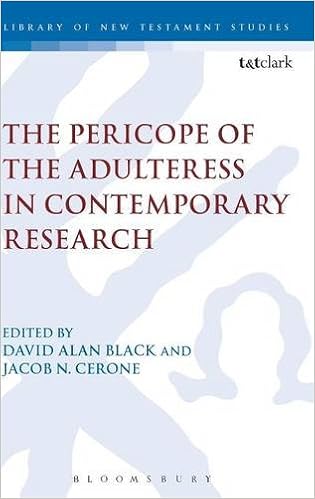
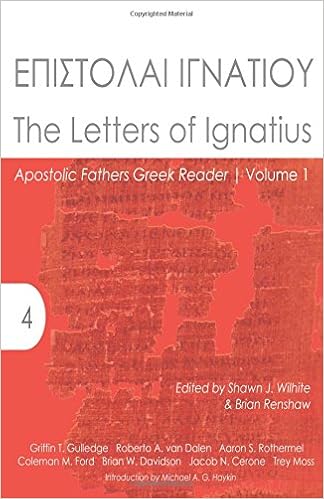
5) I am looking forward to starting this Bibliography class.  I have 10 books on my shelf calling out for my attention.

Posted in Biblical Studies, German, Life, New Testament Studies, NT Greek | Tagged , , , , | Leave a comment

Quote of the Day: from Augustine’s Confessions

Today’s quote comes from the first paragraph of Augustine’s Confessions.

“Magnus es, domine, et laudabilis valde: magna virtus tua, et sapientiae tuae non est numerus.  et laudare te vult homo, aliqua portio creaturae tuae, et homo circumferens mortalitatem suam, circumferens testimonium peccati sui et testimonium, quia superbis resistis: et tamen laudare te vult homo, aliqua portio creaturae tuae.  tu excitas, ut laudare te delectet, quia fecisti nos ad te et inquietum est cor nostrum, donec requiescat in te.”

“You are great, O Lord, and you are to be exceedingly praised.  Great is your virtue and your wisdom is cannot be measured.  Man, who is a part of your creation, desires to praise you.  Man, who carries about his own mortality, who carries about a testimony of his own sin, and the testimony that God resists the proud (James 4:6); however, even this man, who is a part of your creation, desires to praise you.  You provoke, in order that he might delight to praise you; for you created us for you and our heart is restless until it rests in you.”

Posted in Quotes | Tagged , , , | 1 Comment

An Infected Plant And An Infected Soul

I am an amateur gardener.  I like to work in the dirt, but not too much.  I love to plant a cucumber or tomato plant, watch it take root, shoot up, blossom, and bear fruit.  The first year Mary Beth and I started our vegetable garden, we were infested with vegetables.  I realize this is an uncommon expression for new gardeners.  Yet, we couldn’t contain the vast number of cucumbers and cherry tomatos our garden produced.  We would give away 15 cucumbers on Sunday and by Saturday our counter would be covered in 2o.  We had to blend and freeze cherry tomatos (we had a fajita dish I loved eating that required blended tomatos).  Yet, by year three, all of our plants are riddled with disease.  The plant still grows, puts out its leaves, starts to bloom, but the bloom dies and nothing is produced.

I can’t help but reflect on this as an image of Ephesians 2:8-10.  In this passage Paul says,

For by grace you have been saved through faith. And this is not your own doing; it is the gift of God, 9 not a result of works, so that no one may boast. 10 For we are his workmanship, created in Christ Jesus for good works, which God prepared beforehand, that we should walk in them.

There seems to be a subtle contradiction.  Paul says that salvation is not of works in verse 9.  Yet, verse 1o claims that the Christian has been re-created in order that he might do good deeds.  We are left wondering what good deeds have to do with anything.  After all, they were not of any use before salvation, what do they matter now?

This objection suffers in that it fails to understand that the soul, the man, the nature of man is like my blight stricken cucumber plant.  The blossoms on my cucumber plant will always wilt and die if the disease is not remedied.

Last year (my second year of gardening) blight hit the cucumber crop later in the season.  The plant was still capable of producing fruit.  But the crop was inedible.

So also the untreated soul.  No matter how hard it tries to please God by producing good fruit, the efforts will always be spoiled by wilt, rot, or corruption.  A bad tree/cucumber plant/or soul can only produce bad fruit/cucumbers/deeds.

Posted in Biblical Studies, Life, New Testament Studies, NT Greek, Teaching | Tagged , , | Leave a comment

David McCullough Jr.’s High School Commencement Speech

Posted in Sarcasm, Uncategorized | Tagged , | 1 Comment

An Example of Why I Love Eadie

ImageI apologize for all of the recent posts.  But hey, what do you expect from me.  When you study a great deal in preparation for teaching, there is an overflow of excitement that must find an outlet.  Since I have to wait two weeks to teach the material I am currently working on, and because I can’t really share Greek and Latin quotations with a bunch of High School and Middle Schoolers (well I could, but I doubt they will get much out of it since they haven’t studied either language previously), I have to post here.  Yes, I do recognize that most of my audience has already checked out at the words “Greek” and “Latin,” but I will continue for my own benefit, and for the benefit of those that remain.

I am reading Eadie’s comments about Ephesians 2:8 and he begins listing the various ways in which various other authors have understood the phrase καὶ τοῦτο οὐκ ἐξ ὑμων “and this is not from us.”  He claims that Chrysostom and Jerome understand τοῦτο “this” as a reference back to πίστεως “faith” thus rendering the phrase “and faith is not produced from us” implying that God is the one the supplies our faith.  Instead of letting us take his word for it and instead of providing his own translation of these authors, he quotes them.

Chrysostom writes, “οὐδὲ ἡ πίστις ἐξ ἡμων, εί γὰρ οὐκ ἦλθεν, εἰ γὰρ μὴ ἐκάλεσε, πως ἠδυνάμεθα πιστεῦσαι” “This faith is not from us, for if he did not come, for if he did not call, how were we able to believe?”

Jerome writes, “Et haec ipsa fides non est ex vobis, sed ex eo qui vocavit vos” “And this faith itself is not from us, but from him who called us.”

Simply put, it is nice to have a glimpse into the ancient sources.  Maybe I should consider the studying the Patristic’s use of the Greek Old Testament.  I would combine my love for Greek, Hebrew, Theology, and Historical Theology.  Hmmm…

[note: for those who are attentive Greek scholars, you may have noticed that the circumflex is not over the omegas.  This is not because I did not forget it, but because every time I try to type it in unicode, it is being converted into an iota subscript.  Please forgive my poor punctuation and ineptitude to figure this out.]


Posted in Uncategorized | 2 Comments

Disappointment with Commentaries

Please indulge me as I vent a bit more about commentary B.  I only feel it is necessary because I believe that the issues I am currently finding are too often characteristic of modern commentaries.

As you saw in the previous post, author B simply recounted the views of author A without citation or a real attempt to change the material beyond recognition.  Thus leads to my first observation…The production of evangelical commentaries, at times, seems like an attempt to flood the market with more material without having the slightest bit of concern for what is being produced.  There is no emphasis placed on innovation, a new approach, or the integration of new developments in various fields.

The second annoyance (is annoyance too strong a word here), comes from the lack of critical thought when a new commentator disagrees with his sources.  For instance, in my reading I found that author B actually disagrees with author A at one point (yes…he does cite author A this time…shocker…).  Yet, instead of engaging with author A, he simply says, “Against [author A], who claims…”  That’s it.  No reasons are provided for his disagreement.  No support for his claim.  The tragic thing is that there are at least three easily obtained reasons for why author B is right.  Why are they not included? Why am I expected to take author B’s word over author A?  Why even include dissenting opinions if you refuse to engage with your interlocutor?

Posted in Biblical Studies, Greek Resources, New Testament Studies, Sarcasm, Teaching | Tagged , , | 1 Comment

Similarities?

I have been reading through some commentaries on the book of Ephesians. Two of the commentaries, authors to rename nameless, are of interest for this post and will be referred to as A and B. I am putting forth two specific quotes from each author. Determine for yourselves how similar they are to one another.

God’s wrath is not like man’s. It is not bad temper, so that he may fly off the handle at any moment. It is neither spite, nor malice, nor animosity, nor revenge. It is never arbitrary, since it is the divine reaction to only one situation, namely evil. Therefore it is entirely predictable, and it is never subject to mood, whim, or caprice. Further, it is not the impersonal outworking of retribution in society, ‘an inevitable process of cause and effect in a moral universe,’ whether through social disintegration or through the administration of justice by the law courts or in some other way, as C.H. Dodd argued in his famous Moffatt commentary on the letter to the Romans.

A

Compare that with the following:

The ‘wrath’ in view is God’s holy anger against sin and the judgment that results. It is neither an impersonal process of cause and effect, nor God’s vindictive anger, nor unbridled and unrighteous revenge, nor an outburst of passion. Wrath describes neither some autonomous entity alongside God, nor some principle of retribution that is not to be associated closely with his personality.

-B

The next set of quotations comes from the beginning of a new section, Ephesians 2:4.

Verse 4 begins with a mighty adversative: But God…These two monosyllables set against the desperate condition of fallen mankind the gracious initiative and sovereign actions of God. We were the objects of his wrath, but God, out of the great love with which he loved us had mercy upon us.

-A

The magnificent change which God has effected is jubilantly sounded forth. His gracious initiative and sovereign action stand in wonderful contrast with the hopeless condition of fallen humanity which has been described in vv.1-3. Men and women outside of Christ were the objects of divine wrath, but God had mercy on them.

-B

[edit: I am going to add another quote here since I came across it after I posted this.

Paul goes beyond a description of God’s saving action; he gives us some understanding of his motivation.  Indeed the major emphasis of this whole paragraph is that what prompted God to act on our behalf was not something in us (some supposed merit) but something in himself (his own unmerited favour).  Paul assembles four words to express the origins of God’s saving initiative.

 -A

What prompted God to act so freely and mercifully on our behalf?  Using four groups of words, the apostle shows that the origins of God’s saving initiative are to be found in his…

-B

]

Now, I’m not saying that B has outright plagiarized A. After all, he cited A not but a few paragraphs before these instances. After intense hours of study, it is difficult to discern where one commentator’s thoughts end and another begins. It is more difficult to discern whether the words that flow from you when writing are your own or fragmented thoughts from the sources you recently read. Nevertheless, while I’m not saying he’s plagiarized…it seems like he is close to that line if not over it.

[[Edit: Eerdmans has since rescinded this title and others due to their findings that they contain plagiarized material. You can read about that here.]]

Posted in Biblical Studies, New Testament Studies, Teaching | Tagged , , | Leave a comment

Ephesians 2:1-3

I just finished my first lesson on Ephesians 2:1-3.  There will be talk of zombies, the zombie Apocalypse, and hamartiology.  I have to give a shout out to Dr. Black’s link to Wade Burleson’s article “Militant Homosexuals: Loving Them to Christ Without Lambasting Them at Church.”  I plan on utilizing this as an excellent illustration of how Christians must treat the world around them.  After all, who are we to look down our noses at a world that is suffering and dying as we once were.

Posted in New Testament Studies, Teaching | Tagged , | Leave a comment

Eadie on Ephesians

I recognize that Eadie is a somewhat (1883) dated commentary.  Nevertheless, I find that his interaction with the Greek text is extensive.

While reading his comments on 2:1, I came across this gem.

The ‘trespasses and sins’ do not merely indicate the cause of death, as Zanchius, Meier, Ellicott, and Harless maintain, but they are descriptive also of the state of death.  They represent not simply the instrument, but at the same time the condition of death.  The dative may signify sphere….The very illustration used by Alford, ‘sick in fever,’ represents a condition, while it points to a cause.  Sin has killed men, and they remain in that dead state, which is a criminal one.

This idea is supported by the fact that verse two continues to say that we once walked according to the age of the world and the prince of the age.  Not only has sin brought about death, it is also the characteristic of our spiritual state.

Posted in New Testament Studies, NT Greek, Quotes, Teaching | Tagged , | Leave a comment

New Office Space

I have to send a shout out to Andy Bowden.  Hey Andy, does anything in this room look familiar?

He is clearing house in order to leave for Germany.  I am temporarily adding to the house as I tackle the ThM.  Andy made the interesting point that if I complete the program, it will be the second ThM thesis written on this desk.  Maybe we can make a bit of a tradition out of it.

Andy, thank you again for you and Hannah Joy’s hospitality as well as this sweet desk.  Now I will get back to work on my lessons for Cary Alliance Church’s Youth Beach Retreat.  We will be studying Ephesians 2:1-10.

Posted in Life | Tagged , , | Leave a comment